Skip to content

Have questions about SWE programs, events or resources? Try asking Enginuity!

  • Diverse Podcast
  • All Together
  • SWE Magazine
  • Career Center
  • Diverse Podcast
  • All Together
  • SWE Magazine
  • Career Center
Header
Facebook X Green Vector Linkedin Instagram Youtube
Chat with Enginuity Now!
  • about
    About SWE
      • About SWE
      • SWE Learning
      • Headquarters Staff
      • SWE in the News
      • Careers
      • 75th Anniversary
      • SWE: From Then to Now
      • sweSwag Store
      • Public Policy
      • Grants & Foundation Supporters
      • DIVERSE: A SWE Podcast
      • All Together Blog
      • SWE Magazine
      • SWE DEI&B Resources
      • SWE Research
      • SWE Around the World
      • Brand Guidelines
      • Privacy Policy
    Governance
        • Governance Update
        • Board of Directors
        • Board of Trustees
        • Directorate and Working Group Contacts
        • Finance Committee
        • Nominating Directorate
        • Senate Directorate
    • Resource Center
    • Integrated Marketing Advisory Board
    • Volunteer Opportunities Dashboard
    Resources
    Chat with Enginuity Now
    SWE Celebrates Turning 75!
    th image

    Since its founding in 1950, SWE has grown to over 45,000 members and continues to advocate for greater gender equity and diversity. Learn More

    sweSWAG
    Sweswag

    Visit the sweSwag store to get your gear on. Learn More

  • membership
    Membership
    • Renew Your Membership
    • Become a Member
      • Collegiate Membership
      • Professional Membership
      • Educator Membership
      • Life Member, Retired or Unemployed Membership
    • Friend of SWE
    Member Resources
    • Advance Learning Center
    • Affinity Groups
    • Free Patent Academy
    • Member Offers and Discounts
    • Member Portal
    • Member Promotion Toolkits
    • Membership Statistics
    • Mentoring
    • Sections and Affiliates
    • Workplace Groups
    Section & Affiliate Resources
    • Billhighway
    • Brand Guidelines
    • Community College
    • Logo Downloads
    • Global Affiliates
    • Section Leadership
    • Section & Affiliate Start Up
    • Section / Affiliate Website Signup
    • Section & Affiliate Resource Hub
    Affinity Groups
    mega-item-2968

    The SWE Affinity Groups (AGs) mission is to bring together communities with similar interests and backgrounds supporting the diversity, equity, and inclusion (DE&I) strategic goals of SWE. Join today!

    Join SWE Today
    Membership

    Click here to access or create an account!

  • scholarships
    Scholarships
    • Scholarships
    • Scholarships by Section
    • Society Selected Scholarships
    • Apply for a SWE Scholarship
    • Donate to SWE Scholarships
    • Volunteer
    • Scholarship Knowledge Base
    • Celebrate 65 Years of SWE Scholarships
  • programs
    Precollege Programs
        • SWENext 
        • SWENext Clubs
        • SWENext Influencers
        • SWENext Resources
        • SWENext Awards
        • SWENext Connect
        • SWENext High School Leadership Academy (SHLA)
        • Constance & Nano Comics 
        • STEM Pathways
        •  
    Learn more about SWENext
    • Adult Advocates
    • Educators
    • Outreach Toolkit
    • Youth Protection
    Professional Programs
    • SWE Learning
    • Digital Credentialing 
    • Mentoring
    • Advance Learning Center
    SWE Advance Logo Revised Color
    • Academic Leadership for Women in Engineering (ALWE)
    • Collegiate Leadership Institute (CLI)
    • Leadership Development Program (LDP)
    • SWE Leadership Competency Model
    • Ignite Leadership Program
    • Return to Work Cohort
    Global Programs
    • About SWE Global Programs
    • Global Ambassadors
    Diversity, Equity and Inclusion Products

    At SWE, we acknowledge and respect the value of a diverse community. Learn More

    Speaking With SWE

    Are you interested in hosting or developing a professional development session? Learn More

  • events
    WE SaveTheDate PPT x jc
    SWE Conferences
    • WE Conference
    • Past and Future WE Conferences
    • WE Local Conferences
    Other SWE Events
    • Upcoming Events Calendar
    • SWE Group Events Tracker
  • awards
    mega-item-2971
    SWE Awards Program Open January 1 - March 1.

    The Society of Women Engineers strives to advance and honor the contributions of women at all stages of their careers as well as recognize the successes of SWE members and individuals who enhance the engineering profession through contributions to industry, education and the community. Learn More

    Awards
    • About Awards
    • SWE Awards Program
    • SWE Recognition Program
    • Collegiate Competitions
    • SWENext Awards
    • WE Local Awards
    • Certificates of Merit or Achievement
  • partner
    Partner
    • Why Partner With SWE
      • Corporate Councils
      • Conference Partnerships & Recruitment Services
      • Packages
      • Advertising / Branding
      • Scholarships
      • Professional Development
      • Pre-University & University Programming
      • DEI&B Products & Services
      • Corporate Social Responsibility
    • Corporate Partnership Council
    • STEM Return to Work Programming and Services
    • Program Development Grants
    Why Partner With SWE
    partner website image

    As a partner, you can help support critical outreach programs and initiatives that reinforce diversity programming to aid the recruitment, advancement and success of women engineers. Your support at any level is a vital part of the work we do to empower women at all stages of their education and career. 

    Become a partner! Learn More

    Visit our Mediakit
    media kit header image

    SWE members can be found in over 400 professional and collegiate sections in the U.S. and Puerto Rico. With a variety of sponsorships and advertising options, SWE offers distinguished opportunities to reach your target audience. 

    Learn More

  • donate
    • Donate to SWE HQ
    • Donate to Endowed Scholarships
  • login
  • logout
  • about
    About SWE
      • About SWE
      • SWE Learning
      • Headquarters Staff
      • SWE in the News
      • Careers
      • 75th Anniversary
      • SWE: From Then to Now
      • sweSwag Store
      • Public Policy
      • Grants & Foundation Supporters
      • DIVERSE: A SWE Podcast
      • All Together Blog
      • SWE Magazine
      • SWE DEI&B Resources
      • SWE Research
      • SWE Around the World
      • Brand Guidelines
      • Privacy Policy
    Governance
        • Governance Update
        • Board of Directors
        • Board of Trustees
        • Directorate and Working Group Contacts
        • Finance Committee
        • Nominating Directorate
        • Senate Directorate
    • Resource Center
    • Integrated Marketing Advisory Board
    • Volunteer Opportunities Dashboard
    Resources
    Chat with Enginuity Now
    SWE Celebrates Turning 75!
    th image

    Since its founding in 1950, SWE has grown to over 45,000 members and continues to advocate for greater gender equity and diversity. Learn More

    sweSWAG
    Sweswag

    Visit the sweSwag store to get your gear on. Learn More

  • membership
    Membership
    • Renew Your Membership
    • Become a Member
      • Collegiate Membership
      • Professional Membership
      • Educator Membership
      • Life Member, Retired or Unemployed Membership
    • Friend of SWE
    Member Resources
    • Advance Learning Center
    • Affinity Groups
    • Free Patent Academy
    • Member Offers and Discounts
    • Member Portal
    • Member Promotion Toolkits
    • Membership Statistics
    • Mentoring
    • Sections and Affiliates
    • Workplace Groups
    Section & Affiliate Resources
    • Billhighway
    • Brand Guidelines
    • Community College
    • Logo Downloads
    • Global Affiliates
    • Section Leadership
    • Section & Affiliate Start Up
    • Section / Affiliate Website Signup
    • Section & Affiliate Resource Hub
    Affinity Groups
    mega-item-2968

    The SWE Affinity Groups (AGs) mission is to bring together communities with similar interests and backgrounds supporting the diversity, equity, and inclusion (DE&I) strategic goals of SWE. Join today!

    Join SWE Today
    Membership

    Click here to access or create an account!

  • scholarships
    Scholarships
    • Scholarships
    • Scholarships by Section
    • Society Selected Scholarships
    • Apply for a SWE Scholarship
    • Donate to SWE Scholarships
    • Volunteer
    • Scholarship Knowledge Base
    • Celebrate 65 Years of SWE Scholarships
  • programs
    Precollege Programs
        • SWENext 
        • SWENext Clubs
        • SWENext Influencers
        • SWENext Resources
        • SWENext Awards
        • SWENext Connect
        • SWENext High School Leadership Academy (SHLA)
        • Constance & Nano Comics 
        • STEM Pathways
        •  
    Learn more about SWENext
    • Adult Advocates
    • Educators
    • Outreach Toolkit
    • Youth Protection
    Professional Programs
    • SWE Learning
    • Digital Credentialing 
    • Mentoring
    • Advance Learning Center
    SWE Advance Logo Revised Color
    • Academic Leadership for Women in Engineering (ALWE)
    • Collegiate Leadership Institute (CLI)
    • Leadership Development Program (LDP)
    • SWE Leadership Competency Model
    • Ignite Leadership Program
    • Return to Work Cohort
    Global Programs
    • About SWE Global Programs
    • Global Ambassadors
    Diversity, Equity and Inclusion Products

    At SWE, we acknowledge and respect the value of a diverse community. Learn More

    Speaking With SWE

    Are you interested in hosting or developing a professional development session? Learn More

  • events
    WE SaveTheDate PPT x jc
    SWE Conferences
    • WE Conference
    • Past and Future WE Conferences
    • WE Local Conferences
    Other SWE Events
    • Upcoming Events Calendar
    • SWE Group Events Tracker
  • awards
    mega-item-2971
    SWE Awards Program Open January 1 - March 1.

    The Society of Women Engineers strives to advance and honor the contributions of women at all stages of their careers as well as recognize the successes of SWE members and individuals who enhance the engineering profession through contributions to industry, education and the community. Learn More

    Awards
    • About Awards
    • SWE Awards Program
    • SWE Recognition Program
    • Collegiate Competitions
    • SWENext Awards
    • WE Local Awards
    • Certificates of Merit or Achievement
  • partner
    Partner
    • Why Partner With SWE
      • Corporate Councils
      • Conference Partnerships & Recruitment Services
      • Packages
      • Advertising / Branding
      • Scholarships
      • Professional Development
      • Pre-University & University Programming
      • DEI&B Products & Services
      • Corporate Social Responsibility
    • Corporate Partnership Council
    • STEM Return to Work Programming and Services
    • Program Development Grants
    Why Partner With SWE
    partner website image

    As a partner, you can help support critical outreach programs and initiatives that reinforce diversity programming to aid the recruitment, advancement and success of women engineers. Your support at any level is a vital part of the work we do to empower women at all stages of their education and career. 

    Become a partner! Learn More

    Visit our Mediakit
    media kit header image

    SWE members can be found in over 400 professional and collegiate sections in the U.S. and Puerto Rico. With a variety of sponsorships and advertising options, SWE offers distinguished opportunities to reach your target audience. 

    Learn More

  • donate
    • Donate to SWE HQ
    • Donate to Endowed Scholarships
  • login
  • logout

Other SWE Properties

  • WE Local
  • WE25 Conference
  • All Together
  • SWE Magazine
  • STEM Reentry Task Force
  • Constance and Nano
  • eXXec
  • SWE Media Kit
  • Research
  • A4E
Chat with Enginuity Now!
  • SWE Magazine: Home
  • Past Issues
  • About SWE Magazine
  • Media Kit
  • Contact Us
  • SWE Magazine: Home
  • Past Issues
  • About SWE Magazine
  • Media Kit
  • Contact Us

Other SWE Properties

  • WE Local
  • WE25 Conference
  • All Together
  • SWE Magazine
  • STEM Reentry Task Force
  • Constance and Nano
  • eXXec
  • SWE Media Kit
  • Research
  • A4E
SWE Magazine Callout
SOWIE 2023
Special Section, Literature Review

More Than Just “Computers”: Women’s Role in Programming ENIAC

By Peter Meiksins, Ph.D.
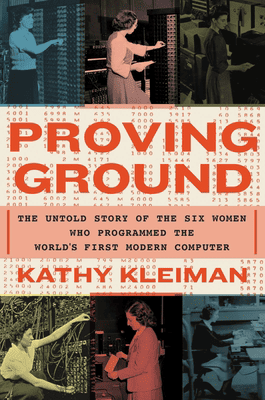
Cover Proving Ground

Popular books and movies about the early days of NASA (e.g., Hidden Figures) and the development of the Enigma machine (e.g., The Imitation Game) have helped to create an awareness that women were not entirely absent from the important technological breakthroughs of the World War II era by describing the roles they played in performing many of the calculations needed to support those efforts. In fact, many people now know that the very word “computer” once referred to the workers (many of whom were women) responsible for complex calculations in the era before modern computers were developed.

What is less well known is that women’s contribution to the development of computers went beyond their role as “computers” (although Grace Hopper, Ph.D., and Ada Lovelace have been acknowledged). Kathy Kleiman’s new book, Proving Ground,i documents how a small group of women, most of whom began as “computers,” were among the first people actually to program a modern computer. Her account of the development of the Electronic Numerical Integrator and Computer (ENIAC), the first programmable general-purpose computer, makes clear that while men led the effort and got virtually all of the credit, women were indispensable to the innovation’s success.

Kleiman, who holds a J.D. from the Boston University School of Law, reports that she discovered women’s involvement in the development of ENIAC more or less by accident. While still a student exploring the early history of women in computing, Kleiman came across pictures of ENIAC that included a number of women, none of whom were identified, performing what appeared to be significant roles in operating the device. Who were these women and what were they doing? Kleiman tried to find out, but even experts on the early history of computing were stumped. She didn’t accept the explanation provided by the female head of the Boston Computer Museum that the women were probably “refrigerator ladies,” i.e., models hired to pose next to machinery.

Digging more deeply into the early history of the ENIAC project, Kleiman learned that between the two World Wars, the U.S. Army had established a unit at the Moore School of Electrical Engineering at the University of Pennsylvania (linked to the nearby Aberdeen Proving Ground in Aberdeen, Maryland) to complete the increasingly complex calculations needed to target artillery (gunners relied on these calculations rather than their own senses because of the huge distances between artillery and the targets they sought to hit). When the U.S. entered World War II, finding men with the needed mathematical skills became increasingly difficult, so the Army turned to recruiting mathematically trained women from nearby schools and universities to serve as “computers.” Female recruits were trained to calculate trajectories, then set to work using desk calculators to create the firing tables needed to target weapons. As the war progressed, the volume and urgency of the work increased, so more women were recruited, and a few were trained to do the work using a differential analyzer, a complex machine developed by Vannevar Bush, Ph.D., that could complete calculations more quickly.

Even this was not enough, however, so the program’s leaders cast around for alternatives. The eventual solution emerged when they talked to Moore faculty member John Mauchly, Ph.D., who, with his collaborator, J. Presper Eckert, Ph.D., had been unsuccessfully floating the idea of developing an all-electronic programmable computer to use in weather forecasting. They eventually succeeded in persuading the Army and the Moore School to proceed with the development of what eventually came to be known as ENIAC, and work on the new machine was well underway by 1944. Early on, the project was completely secret, and none of the women working on ballistics calculations knew what was going on. Then, in June 1945, a memo inviting women computers to apply to work on the new machine was issued. Five women were selected (a sixth was added later) and sent to the Aberdeen Proving Ground to be trained in the use of IBM equipment (card readers, card punch, tabulating machines, etc.).

The group of women stayed on at the Moore School after V-J Day (after which many of the other female computers returned home) and finally were introduced to ENIAC and told that their job was to use it to develop a working ballistics trajectory program. They received no training in how to use ENIAC, however, nor was there a manual. So, they had to teach themselves. They learned how to read the drawings they received from the engineers, then how the various parts of the machine worked. Finally, they had “to figure out how to communicate a human problem to the complicated computer…o one taught them at the Moore School.” (137) They then were set to work with two scientists from Los Alamos, helping them use ENIAC on what they later learned were rough calculations for triggers for the hydrogen bomb. They used the knowledge they gained of how to use ENIAC to help them complete the work of developing the ballistics trajectory program.

The initial public demonstration of ENIAC, using the women’s program, occurred Feb. 15, 1946. After the demonstration, the women were not sent home, as the Army still needed them to help figure out what the machine was capable of. When ENIAC was moved to the Aberdeen Proving Ground late in 1946, several of the women stayed on and continued to work with the machine, although eventually most moved on after a few years, either because of marriage, relocation, or both.

What do we learn from the story Kleiman recounts? First, the women’s contribution to the ENIAC project was more than simply clerical and was, in real ways, pioneering. For example, early on, when they discovered that ENIAC was processing calculations too slowly for what the Army needed, they figured out a way to use ENIAC as a parallel processor (i.e., run several calculations at the same time, something many subsequent computers were unable to do). In checking whether their program worked, they also figured out how to get the machine to move quickly through the calculations to get to the point at which they had stopped, rather than having to start over from the beginning after each step was checked. They called this “breaking the point” and claim that this was the origin of the term “breakpoint,” still in use in computer science today. Finally, they developed a form of diagnostic programming that even the engineers with whom they worked saw as a breakthrough: “Initially, the engineers were a little reluctant to stop their own work to help, but when they realized the women could ‘debug the hardware down to a vacuum tube,’ they were ‘absolutely fascinated.’” (170)

Kleiman argues that, as a result of their work, “the profession of modern programming was born. A group to serve as liaisons between people with problems and computers that would help solve them. The six women were the first professional programmers of a modern computer.” (193) Yet, despite having made these innovations, having taught themselves how to program ENIAC, and having been retained because the Army relied on them to keep the ENIAC work moving forward, the women received virtually no recognition. They were present at ENIAC’s initial public demonstration but were not acknowledged as having contributed to the programming. Nor were they invited to the celebratory dinner held afterward. When Drs. Mauchly and Eckert were invited to give a series of talks on the origins of modern computing (now known as the Moore School Lectures), none of the women were invited to attend. And, although the women have belatedly received some recognition (e.g., two were invited to be keynote speakers at the 1999 Turing Award ceremony in San Francisco), many continue to ignore or downplay their contributions. Kleiman notes that the women were not invited to the Moore School’s 50th anniversary event for the ENIAC project. She also complains of a “group who actively demean those who try to tell the ENIAC programmers’ stories” (231) and notes that some accounts deny that the women made any innovations and describe them as “glorified clerical workers.” (230)

Kleiman makes a persuasive case that telling stories such as this one about women’s early contributions to postwar science and technology is about more than just setting the record straight. She notes that, during her career working in computer science, she encountered many women who were dissatisfied with the way they were treated by their colleagues and encountered men who questioned their ability to make it in the field: “The women were very good at their jobs but feared they did not belong in computing. They were tired of being told that computing was a field for men.” (226) Kleiman found that telling these women the story of the ENIAC Six helped lift their spirits. If she is right, a more complete history of women’s role in pioneering projects such as ENIAC may serve as a powerful retention device in a field that struggles to keep the women it recruits.

Endnotes

i Kleiman, K. (2022). Proving Ground: The Untold Story of the Six Women Who Programmed the World’s First Modern Computer. New York: Grand Central Publishing.

Tweet
Share
Share
0 Shares

Author

  • Cropped Swe Favicon
    Peter Meiksins, Ph.D.

    Peter Meiksins, Ph.D., is emeritus professor of sociology at Cleveland State University. He earned a B.A. at Columbia University and Ph.D. at York University, Toronto. Major publications include Putting Work in Its Place: A Quiet Revolution, with Peter Whalley, Ph.D. (2002), and Changing Contours of Work: Jobs and Opportunities in the New Economy, 4th edition, with Stephen Sweet, Ph.D. (2020).

SHARE

Tweet
Share
Share
0 Shares

RELATED ARTICLES

lit review toc
Women in Engineering: A Review of the 2022 Literature
Women in Engineering: Analyzing 20 Years of Social Science Literature
Good Guys book cvr
Male Allies: A Potential Force for Improved Workplaces
2020 outstanding women in engineering graphic with bright glitter behind type
2020 Outstanding Women in Engineering
women in engineering: a review of the 2020 literature, main feature graphic with line drawing graphics of gears, formulas
Women in Engineering: A Review of the 2020 Literature
Footer

Office

130 East Randolph Street, Suite 3500 • Chicago, IL 60601 • 1.312.596.5223 • hq@swe.org

Legal

© Society of Women Engineers. 2026. All Rights Reserved. Privacy Policy. For unresolved issues, please contact SWE’s Ombudsman.

Social

Facebook X Twitter Vector Linkedin Instagram Youtube
Scroll to top