

In 1950, less than 1% of working engineers in the United States were women. The doors that had opened for women in STEM during World War II all but closed as men returned to their jobs and careers. In newspaper clippings and interviews from that time, the few women who persisted in technical fields were often praised for their looks before their abilities and achievements. Seen through this lens, the lives and legacies of the Society of Women Engineers’ founding and charter members shine more brightly than ever. Role models and inspirations all, here are their stories.
Barrier breakers

Elsie Eaves followed an early love of math and curiosity about mining to become the first woman to earn a civil engineering degree from the University of Colorado (now called CU Boulder) in 1920, and the first to be named a Distinguished Engineering Alumna.
Continue Reading
Eaves began her career as an instructor in engineering mathematics, then served briefly as a draftsman for the Colorado State Highway Department; for three years as an office engineer for a Denver contractor; and for six years as director of market surveys for Engineering News-Record and Construction Methods and Equipment. In 1932, Eaves was promoted to managing the business news department of both publications, holding that position until her retirement from McGraw-Hill Co. in 1963. For many years afterward, she worked as an engineering consultant, writer, and speaker.
Eaves contributed her talent to Society of Women Engineers for decades, sharing her publishing expertise and serving as advisor and editor of its early journal and newsletter. She served on the SWE Board of Trustees for 15 years and was an active member of the New York Section.
Countless young women benefited from her advice and mentorship, which came with a good measure of “tough love” that tested their determination to work in a male-dominated industry. Among those Eaves influenced was Ada Richardson Pressman, a future SWE president. One of Pressman’s final acts in that role was to present Eaves with the first SWE Fellow certificate in 1980.
Other notable accomplishments:
- Shortly before her passing in 1983, Eaves lobbied SWE to provide babysitting services at its annual conventions.
- She was the first woman honorary, associate, and life member of the American Society of Civil Engineers.
- Eaves was the first woman member of the American Association of Cost Engineers and its first woman civil engineer.

Hilda Counts Edgecomb and Lou Alta Melton, engineering students at the University of Colorado Boulder, co-founded the short-lived American Society of Women Engineers and Architects in 1920, decades before SWE’s formation.
Continue Reading
The first woman at the university to earn a B.S. in electrical engineering, Edgecomb was accepted into a student training course at Westinghouse Electric Corporation. She intended to return to her alma mater for graduate work but married in 1926, leaving the workforce for more than a decade. After her husband’s death, Edgecomb worked briefly with The Boeing Company and the U.S. Army Corps of Engineers. In 1943, she became the first woman engineer hired by the Rural Electrification Administration, an agency established in 1935 as part of the New Deal to bring electricity to rural areas. She remained there until her retirement in 1963.
Edgecomb served as SWE’s first national treasurer (1950-51). In 1952, she helped found the Denver Section, which was chartered in 1954 and is now known as the Rocky Mountain Section. She was known for her patience, generosity, and unwavering advocacy of women engineers. When Edgecomb left a generous bequest of $20,000 to the SWE Scholarship Fund, SWE established its Pioneer Scholarship in memory of Edgecomb, Melton, and Eaves.
Other notable accomplishments:
- She was a registered professional engineer in Missouri.
- She was a member of the Washington, D.C., Society of Professional Engineers, serving as board member and chair of the construction and bylaws committees.
- In 1951, she presented a piece of pine wood from a White House renovation to SWE’s board, recommending that a gavel be made from it. The gavel was created and is stored at the SWE Archives at the Walter P. Reuther Library at Wayne State University in Detroit.
Creative sparks

Evelyn Vernick Fowler graduated from Pratt Institute’s art school in 1942. During World War II, she worked as a draftsperson and took engineering classes offered on behalf of the U.S. government to fill the labor gap left by men fighting overseas.
Continue Reading
While working at the Hercules Electric and Manufacturing Company, she met electrical engineer and company president Alexander Fowler, whom she married in 1944. To complement her husband’s specialty, she chose to pursue chemical engineering, but Columbia University refused to admit her based on gender. She could not be admitted
to Brooklyn Polytechnic because it did not have women’s restrooms. She returned to her alma mater instead, earning a degree in chemical engineering in 1948.
In 1952, Fowler and her husband established the American Actuator Corp. of New York, which manufactured safety equipment for sheet metal fabricating machinery. Later, the couple ran the company from their new home in Connecticut. Together they developed electrical control systems for bending sheet metal, earning several patents.
Fowler is recorded as the 13th member of SWE. She served in almost every leadership role at the section level from 1954 through the 1970s, first in the New York Section and then with the Connecticut Section. At the Society level, she served on the nominating committee and chaired the awards committee. As chair of the new industrial support committee in FY72-FY73, she significantly increased corporate membership.
Other notable accomplishments:
- She developed the concept for SWE’s first logo.
- She was a longtime supporter of the League of Women Voters, volunteer for Meals on Wheels, and member of numerous chamber music groups.
- She was related by marriage to Miriam Gerla, SWE’s fifth president.

Evelyn Jetter was the first woman to earn a B.S. in electrical engineering from the Cooper Union’s night school, a feat accomplished while working days as a junior engineer at the Metropolitan Device Corp. Later, she earned an M.S. in physics at Rutgers University.
Continue Reading
Jetter initially worked for the Atomic Energy Commission’s Health and Safety Laboratory and Lionel Industries before joining RCA Corp., where she invented the automotive ignition transistor. She was also the primary developer of epitaxial base power transistors used in many types of industrial and consumer electronic equipment.
While raising four children at home, Jetter ran a consulting business and collaborated with Beatrice Hicks, SWE’s first president. The two women worked on Hicks’ patented gas densitometer switch, which was later refined for use on NASA’s Apollo moon missions.
Jetter chaired SWE’s public relations committee from 1950 to 1952. She was the first secretary-treasurer for the board of trustees; director of the New York Section and awards committee chair from 1953 to 1954; and chaired the archives committee from 1957 to 1962.
Jetter died in 1979 at the age of 52. In an oral history recorded at WE13, the Society’s annual conference, her daughter, Alexis, said of the conference’s high attendance: “If my mother could see this, she would be really happy … I don’t think she could ever imagine this. And it’s what [the founders] wanted. They didn’t want girls to be discouraged.”
Other notable accomplishments:
- While at the Atomic Energy Commission, she measured and analyzed external radiation for health physics purposes and worker safety.
- In 1977, the David Sarnoff Research Center presented her with an achievement award for her contributions to developing a computer system for controlling semiconductor manufacturing.

Phyllis Evans Miller pursued a B.S. in mechanical engineering at Drexel Institute of Technology (now Drexel University). She helped plan the student-led Conference of Women Engineers in 1949, which spurred SWE’s formation a year later. She served as SWE’s first corresponding secretary from 1950 to 1952. She chartered the Pittsburgh Section in 1951, serving as its first vice president and secretary. She then served three terms as section president, three as vice president, and two as treasurer. She often promoted SWE and engineering as a career for women during her speaking engagements and in area newspapers.
Continue Reading
Evans Miller’s flair for research led to identifying Bertha Lamme as the first woman engineer hired by Westinghouse in 1893. Her discovery prompted the company to sponsor annual SWE scholarships in Lamme’s name.
Evans Miller worked in the Westinghouse Electric Atomic Power Division on the mechanical drive train for the Nautilus submarine. Prior to that, she worked at the Naval Air Development Station in Johnsville, Pennsylvania, satisfying her fascination with rockets and the possibilities of human spaceflight.
Evans Miller worked briefly as a mechanical engineer and then partnered with another woman to offer engineering and drafting services. She later became active in historic preservation, buying old properties and using her engineering acumen to supervise restorations.
Other notable accomplishments:
- She was a member of the American Society of Mechanical Engineers, or ASME, the American Rocket Society, and the Pennsylvania Society of Professional Engineers.
- Much of the current understanding of SWE’s founding stems from her detailed writings and recollections.
- She took flying lessons during WWII, hoping to join the Civil Air Patrol, but her father feared for her safety and pulled her from the program.
Engineering legends

Lillian Moller Gilbreth, Ph.D., revolutionized industrial engineering. Born in 1878, she earned a B.A. and an M.A. in English literature at the University of California, Berkeley. In 1904, she married construction company owner Frank Gilbreth. She earned a Ph.D. in applied psychology in 1915 at Brown University while expecting her sixth child.
Continue Reading
A pioneer in the field of ergonomics, Dr. Gilbreth and her husband developed motion studies to increase the efficiency of industrial workers and co-authored books on the subject. Dr. Gilbreth went further, introducing applied psychology to the design and improvement of systems related to people, equipment, and energy. She emphasized reducing worker fatigue by introducing better lighting, better chairs, and even routine coffee breaks. She also pioneered in applying motion study and scientific work analysis to aid people with disabilities.
When her husband died in 1924, Dr. Gilbreth raised their 11 surviving children of 12 alone, taking keen interest in finding ways to make housework easier. Her research resulted in the “kitchen work triangle” concept, still considered a gold standard in kitchen design.
Revered by engineers everywhere, Dr. Gilbreth’s calendar of speaking engagements remained full into her 80s and early 90s.
Other notable accomplishments:
- She was named first honorary member of SWE at its founding meeting.
- The 1950 hit film, Cheaper by the Dozen, is based on her life as told in a bestselling memoir written by two of her children.
- She was the first woman inducted into the Society for Industrial Engineers in 1921, the National Academy of Engineering in 1965, and received more than 20 honorary degrees.
- She was the first woman to receive the Hoover Medal, given by engineers to engineers for distinguished public service, in 1966.
- In 1984, a U.S. postage stamp was issued in her honor.

Grace Murray Hopper, Ph.D., a pioneering computer scientist, co-developed the computer industry’s common business-oriented language, known widely as COBOL. She earned a B.S. in mathematics at Vassar College in 1928, an M.A. in math and physics at Yale in 1930, and a Ph.D. in mathematics at Yale in 1934.
Continue Reading
Dr. Hopper taught math at Vassar, then joined the United States Naval Reserve during WWII, maintaining her commission after mustering out in 1946. In 1949, Eckert-Mauchly Computer Corp. was involved with building the universal automatic computer, known as UNIVAC, the first commercial electronic computer, and Dr. Hopper joined the company as a senior mathematician. She stayed on with its successors, Remington Rand Inc. and Sperry Corp., until she retired in 1971.
A brilliant communicator, Dr. Hopper was widely known as “Amazing Grace.” To remind others that there is more than one way to do things, she kept a clock in her office that ran (perfectly) counterclockwise. She is also credited with the famous quote: “Go ahead and do it. You can always apologize later.”
Dr. Hopper was a founding and charter member of SWE and a charter member of the Philadelphia Section. In 1964, she received the SWE Achievement Award for “significant contributions to the burgeoning computer industry as an engineering manager and originator of automatic programming systems.” In 1991, she received the National Medal of Technology and Innovation from the U.S. Patent and Trademark Office for her immense body of work. Though she retired from the Naval Reserve in 1966, she was called back to active duty a year later. In 1983, Dr. Hopper was elevated to the rank of commodore, though the title reverted to rear admiral in 1985. She retired in 1986 at age 79 as the Navy’s oldest active-duty commissioned officer.
Other notable accomplishments:
- In 1986, Dr. Hopper received the Distinguished Service Medal from the Department of Defense and the Navy named the Aegis destroyer USS Hopper in her honor.
- SWE established the Admiral Grace Hopper Scholarship after her death in 1992.
Guiding lights

Beatrice Hicks discovered engineering as a young girl, when her father took her to see the great buildings and bridges of New York City. She earned a B.S. in chemical engineering at Newark College of Engineering, then studied electrical engineering and earned an M.S. in physics at Stevens Institute of Technology.
Continue Reading
At 31, Hicks became vice president and chief engineer of her father’s firm, Newark Controls Inc., which manufactured environmental sensing equipment for NASA. She pioneered in the theoretical study, analysis, development, and manufacture of sensing devices, patented a molecular density scanner that was used in the Apollo missions, and developed an industry model for quality control procedures. In 1955, Hicks became president of the company, and later, owner of the communications consulting firm operated by her husband, Rodney D. Chipp, after his death in 1966.
Hicks was SWE’s first president, and her two terms saw membership more than triple from 61 at the founding meeting to 220 by the end of FY1952. She was a SWE board member in FY1952-53, chaired the development committee in FY1955-56, and served on the board of trustees from FY1960 to FY1964. She also served as conference director of the first International Conference of Women Engineers and Scientists, which SWE hosted in 1964.
SWE honored Hicks in 1963 with its Achievement Award “in recognition of her significant theoretical study and analysis of sensing devices under extreme environmental conditions, and her substantial achievements in technical understanding, professional guidance, and engineering education.” Hicks remained active in multiple engineering societies throughout her career and was elected to the National Academy of Engineering in 1978. The National Inventors Hall of Fame inducted her posthumously in 2017.
Other notable accomplishments:
- Hicks was the first woman to receive an honorary Ph.D. in engineering from Rensselaer Polytechnic Institute.
- She was named 1952 Woman of the Year in Business by Mademoiselle magazine.
- She was a licensed professional engineer in New York and New Jersey.
- She was instrumental in creating SWE’s Rodney D. Chipp Award, first given in 1968.
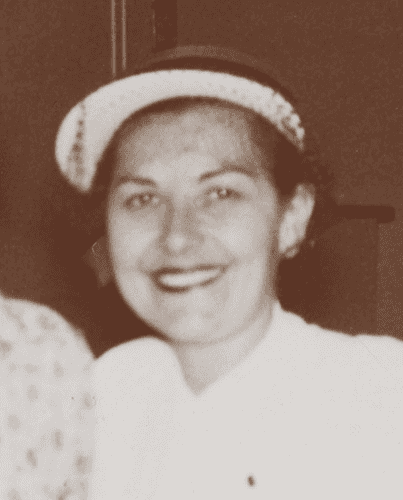
Lillian G. Murad planned to be a concert pianist. Born in 1917 in Armenia at the peak of the Armenian genocide, she grew up in France, graduated from the Conservatory of Music in Nice, and won the Premier Prix de Piano in 1933. After moving to New York, she studied music, drama, and dance from 1936 to 1942.
Continue Reading
Switching her focus, in 1947, Murad became the first woman to earn a B.S. in chemical engineering from Pratt Institute and pursued graduate studies at New York University. In 1949, she founded Muratex Chemicals, which supplied chemicals to the textile industry.
From 1949 to 1951, Murad developed and introduced water-based pigment binders for natural and synthetic fabrics. Not long after, the “fad” of gilded drapes, dresses, shoes, and bags was said to be a direct result of this new technique. She ran a textile converting business, Murad Textile Print Works Inc., from 1948 to 1955, and her freelance textile designs often appeared in Interior Design magazine.
Murad served as SWE’s first finance committee chair in 1950 and for several years after, as vice president in 1951, and as president in 1952-53.
After declining a second term, Murad served as secretary-treasurer and on the board of trustees during FY63-FY64.
Other notable accomplishments:
- Murad was fluent in English, French, German, Russian, and Armenian.
- She taught chemistry and physics at Oyster Bay High School in New York, and was instrumental in establishing an art and literary magazine, Agapae, which won several awards in high school competitions in the New York metropolitan area.
- At her death in 2004 at age 87, she was the oldest living SWE president.

Miriam “Mickey” Gerla’s interest in engineering sparked in 1939 while attending lectures with her engineer husband. She went on to earn a B.S. in mechanical engineering in 1944 at the University of Maryland. After graduation, she worked until 1951 as a design engineer at numerous companies involved in experimental ordnance equipment, high-speed industrial machinery, and power transmission. By 1954, she had switched to management consulting, from which she retired in 1960.
Continue Reading
Gerla’s leadership was crucial to SWE’s survival as an organization. She was a charter member and the first chairman, as it was called then, of the New York Section from 1949 to 1951, which met locally before the Society was formalized in 1950. From 1950 to 1952 she chaired the national bylaws committee, and from 1955 to 1957, she was in quick succession director at large, vice president, and president. As vice president, she succeeded Dorothea Perry after she died unexpectedly. Shortly afterward, SWE President Lois Graham McDowell resigned due to scheduling conflicts, and Gerla stepped in.
Gerla inherited a Society in turmoil — with a 29-person board, exhausted volunteers, and tangled procedures and operations. Facing steep challenges, mountains of paperwork, and fighting burnout, she led SWE to a sustainable future. By the end of Gerla’s second term, SWE was back on solid ground with 650 members, part-time contract secretarial services, and restructured bylaws and operations. She then served for two years as chairman of the finance committee. Gerla believed that “life’s richness and fullness could best be attained by constant learning, developing, expanding, and practicing one’s interest and abilities,” and that an engineer should be a well-rounded personality.
Other notable accomplishments:
- She was a member of ASME and charter member and chairman of the Service Committee for Foreign Students of The New School.
- In a letter to the new SWE president in 1958, she wrote: “I know the troubles the job entails, but the pleasures are there, too. May the former decrease and the latter increase as the years go on.”

In 1947, Patricia Brown became the first woman chemical engineer to graduate from Southwestern Louisiana Institute. Two years later, she earned an M.A. in chemistry at the University of Texas. She briefly taught chemistry at Smith College, became a research associate at Albany Medical College, then joined Ethyl Corp. as a technical information resources specialist.
Continue Reading
Next, Brown worked as a technical writer at Westinghouse’s Atomic Power Division. In a 1955 interview with the Pittsburgh Press she said, “Women engineers are here to stay. So far, I am one of a few technical writers in the field of atomic energy, and the only feminine one in Pittsburgh. If you find any more, I’ll hire them.”
Brown joined Texas Instruments in 1957 to work as an information services supervisor, managing the library of its semiconductor components division. She left for a research career at Battelle Memorial Institute in 1966, later accepting a position in technical information management at Baxter Laboratories. A recognized expert in information and research, Brown remained in the field until her retirement in 1993.
In 1951, Brown became a pioneering SWE member and its publications director. In 1955, she edited the Society’s first career guidance booklet. In 1952, she helped charter the Detroit Section, and as she moved around the country, also became a charter member of the South Ohio Section. Brown served in many Society level roles, as board member and committee chair; as vice president in 1960; and as president from 1961 to 1963. She is a Fellow and life member and lives in Las Vegas.
Other notable accomplishments:
- She joined SWE in 1951 after Isabelle French handed her a membership application during a hiking trip on Mt. Washington.
- She was a member of the American Society for Information Science, the American Chemical Society, and the Society for Technical Communication.
- She was the first SWE president elected from the members at large.
Educators and advocates

Stella Lawrence Daniels taught physics and engineering for more than 20 years at Bronx Community College. During the summers, she consulted for numerous companies, NASA, and Wright-Patterson Air Force Base. Her areas of expertise included fault tolerance of computers, solar energy applications, space industrialization, magnetohydrodynamics, and communication systems coding. She was also an editor for Electronic Design magazine and a translator for USSR Academy of Sciences proceedings.
Continue Reading
Daniels edited the New York Section newsletter for more than two years, published articles in the early SWE journal and newsletter, and authored many articles promoting engineering as a woman’s career, including the classic “Slide Rule Princesses” published in American Girl, in 1958. The article was reprinted and distributed for years to young women at colleges and high schools. Honoring more than 40 years of dedicated advocacy, she was named a SWE Fellow in 1985.
Daniels promoted women in engineering in other organizations including the American Society for Engineering Education, ASME, and the Technical Societies Council of New York, where she served as its first woman president in 1949. She fought to place women on the accreditation teams for the American Engineers’ Council for Professional Development, now known as ABET. The Institute of Electrical and Electronics Engineers awarded her its 1984 Centennial Medal for technical achievements, and the Brooklyn Engineers Club named her a fellow in 1960.
Other notable accomplishments:
- Daniels was the first woman to earn a B.S. (1949) and an M.S. (1952) in electrical engineering at the Polytechnic Institute of New York.
- She earned a B.A. in math and physics and an M.A. in physics at New York University.
- She was among the first women engineers hired by Bell Laboratories and to teach physics and engineering in New York City colleges.

Alma Kuppinger Forman’s long career spanned government, industry, and academia. Initially, she worked as a cartographer, creating maps from aerial photographs. In the 1960s, she ran a consulting company at home while raising her family. She made significant contributions to applications for engineering graphics in industry and medicine, including methods for detecting heart stress. She also pioneered the use of 3-D modeling in the classroom.
Continue Reading
In the mid-1970s, Forman began teaching at Drexel Institute of Technology and Temple University, where she encouraged students to form a SWE section. She served as its faculty advisor until her 1995 retirement.
Forman is a charter member of the Philadelphia Section. Along with Phyllis Evans Miller, she was among the women engineering students at Drexel who, in 1949, organized the student-led Conference of Women Engineers.
During SWE’s formative years, Forman served on the national board of directors and the nominating committee; as chair of the first Eastern Seaboard meeting in 1955; and several terms as Philadelphia Section chair and editor of its newsletter. In later years, she continued working with students.
Recently, Forman has provided many archival materials and other background on the genesis of the Society and the Philadelphia Section. She was named to the section’s Hall of Fame in 1990 and named a SWE Fellow in 2010.
Other notable accomplishments:
- Forman was the first woman to earn a B.S. in civil engineering at Drexel University in 1949.
- She became a registered professional engineer in Pennsylvania in 1959.

Dorothy Rice Young earned a B.S. at New York University in 1933 and an M.A. in student personnel administration at Columbia University in 1941. Young began teaching in elementary and secondary schools, then branched into administration, serving as director of residence and assistant dean at the Women’s College of the University of North Carolina, and assistant dean of women at Bucknell University.
Continue Reading
Young was a strong advocate of coeducation and of women in technical fields. Arriving as dean of women at Drexel in 1945, she held an informal tea so the handful of women engineering students could meet to trade stories and get valuable tips from older students. Encouraged, they petitioned the university to create a Society of Women Engineers student organization. SWE named her an honorary founder and charter member for serving as the catalyst that brought these women together.
In 1953, the U.S. Department of State sent Young to Germany on a cultural exchange mission. She actively campaigned for President Dwight Eisenhower and, in 1956, he appointed her to the Annual Assay Commission of the United States Mint in the city of Philadelphia.
At Young’s 1965 retirement, Drexel’s yearbook noted, “She served as an excellent example for the young women at Drexel whom she has always urged to take an active role as citizens. Drexel will be losing not only a dean of women, but a warm and wise friend whose colorful hats drew comments and admiration at every gathering.”
Other notable accomplishments:
- She was a member of the National Association of Deans of Women, the American Association of University Women, the League of Women Voters, and board member of the National Association of Foreign Student Affairs.
- She lived to age 100 and was a poet who traveled extensively and attended writing workshops as far away as Guadalajara, Mexico.
Materials, including photos except where noted, were drawn from the SWE Archives at the Walter P. Reuther Library, Wayne State University, with thanks to Troy Eller English, SWE archivist. Additional sources: U.S. Department of Labor Women’s Bureau Bulletin No. 254, “Employment Opportunities for Women in Professional Engineering” (1954), The National Museum of Women’s History, Drexel University Libraries, and the National Academy of Engineering.