

Principal engineer Abosede Adewole earned a degree in electrical engineering in 2003; however, breaking into the profession proved far more difficult than earning the credential. For nearly two decades, she held roles ranging from secretary to business manager, while actively seeking entry into engineering practice. Her struggle had nothing to do with her ability or ambition, but with a lack of opportunity to demonstrate what she was capable of doing.
In her home in Lagos, Nigeria, many engineering firms were reluctant, and in some cases openly unwilling, to hire women at that time. After later relocating to Abuja, where she now lives and works for the nation’s Federal Housing Authority, Adewole encountered a turning point. In 2022, she received an unexpected call to interview for an entry-level engineering role. Unbeknownst to her, a former classmate had submitted Adewole’s CV on her behalf and personally vouched for her credibility, creating an opportunity she likely would not have received otherwise.
Adewole’s experience illustrates the power of relationships in career advancement — and the crucial distinction between mentorship and sponsorship. Mentorship builds competence and confidence, while sponsorship provides access and influence. For Adewole, sponsorship opened the door to her engineering career, while mentorship later helped her perform, grow, and sustain momentum, proof that both are essential to career advancement. “We need both to excel in our careers and to reach the top at a faster pace,” says Adewole, who also advocates for other women in STEM. “One without the other limits progress.”
Definition of mentorship
Mentorship is the relationship most people think of when considering career advancement. As a dyadic partnership, mentorship centers on a mentor sharing skills, knowledge, and experience to help improve a mentee’s performance. “A mentor is someone who holds your hands and teaches you skills,” explains Stella Uzochukwu-Denis, country director for Odyssey Educational Foundation, a STEM education organization in Gwarinpa, Nigeria. “You need a mentor to bring you up to speed.”
Because mentorship focuses on competency development, it is invaluable for early-career professionals who have not yet had a chance to develop their skills. A mentor can help these individuals learn, develop, and gain confidence, so they perform better in their current role or intentionally prepare for a future one. “A mentor will help you develop your skills to prosper in your career, especially in the early stage,” Adewole says.
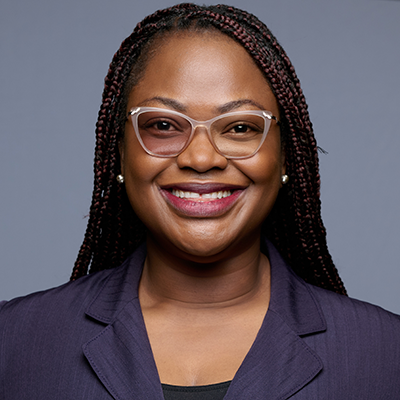
“Sponsorship often follows mentorship, though not always from the same individual, because capability must precede advocacy. You have the competency, but if you want to be visible among managers and decision-makers, you need someone to speak on your behalf and recommend you.”
— Abosede Adewole
Uzochukwu-Denis benefited from mentorship before she even entered college. During a gap year, she worked alongside her uncle, running wiring through houses, an experience that gave her a critical head start. She didn’t fully realize its value until she arrived at university and found herself one of only a handful of women in an electrical engineering program. “If I didn’t have an uncle who believed in me, who trusted that I wasn’t going to mess things up, maybe I wouldn’t have been able to be in the electrical engineering program,” she says.
Listen to Adewole and Uzochukwu-Denis discuss the importance of mentors and sponsors on Diverse, a SWE podcast:
Mentors are not just for recent graduates. They can help everyone learn new skills and develop new perspectives throughout their careers. Catherine Meyn, owner of Meyn Connections in Carlsbad, California, and past chair of the Society of Women Engineers Mentoring Working Group, says mentorships are particularly effective for uncovering and addressing blind spots, those unconscious behaviors or habits that can undermine performance over time. “A mentor can give you some ideas,” Meyn says. “He or she can tell you, ‘Here’s something I tried that made a difference.’”
Mentorships can also help people keep pace with ongoing change within their industry. In the past five years, for example, new work models and artificial intelligence tools have reshaped how people work, and those shifts show no signs of slowing, making career-long mentorships increasingly important.
“There are always new challenges, new opportunities, and new complexities,” says Audrey J. Murrell, Ph.D., professor of business administration, psychology, and public and international affairs at the University of Pittsburgh. She has co-authored two books on mentoring, Mentoring Dilemmas: Developmental Relationships within Multicultural Organizations and How IBM Creates Value through People, Knowledge, and Relationships. “The need for mentoring never goes away.”
Definition of sponsorship
While mentorship focuses on guidance to improve performance, sponsorship is about public advocacy. A sponsor speaks on behalf of a sponsee to increase the sponsee’s access to opportunities. An inherently triadic relationship, sponsorship involves a sponsor, a sponsee, and at least one external decision-maker. “A sponsor is somebody who will go to the table and say, ‘Yes, I’m sure this person will be able to deliver on this job,’” Uzochukwu-Denis says. “They speak on your behalf and make you visible because they know what you can do.”
That dynamic played out for Uzochukwu-Denis, who secured a role in Nigeria’s petroleum industry — even after a hiring manager told her he did not believe women could balance the job’s unpredictable demands with family responsibilities. Determined to prove him wrong, Uzochukwu-Denis showed up at the manager’s office every day to advocate for herself. Behind the scenes, her sponsors reinforced her case, telling her manager things such as, “I know this lady. I can speak for her. She is very good at this,” Uzochukwu-Denis recalls.

“A sponsor is somebody who will go to the table and say, ‘Yes, I’m sure this person will be able to deliver on this job.’ They speak on your behalf and make you visible because they know what you can do.”
— Stella Uzochukwu-Denis
For a sponsor to advocate in this way, the sponsee must already possess the skills and competence to excel. Adewole emphasizes that sponsors are willing to put their own reputation on the line only when they trust a person’s ability to deliver. “Sponsorship often follows mentorship, though not always from the same individual, because capability must precede advocacy,” she notes. “You have the competency, but if you want to be visible among managers and decision-makers, you need someone to speak on your behalf and recommend you.”
People with a sponsor typically advance much faster than those without one, says Rosalind Chow, Ph.D., associate professor of organizational behavior and theory at Carnegie Mellon University. She likens sponsorship to a career “jet pack,” noting sponsored employees are more likely to land high-profile projects, gain exposure to senior leaders, and be introduced to influential networks.
“Every organization has its ‘golden children’ who seem to have the carpet rolled out for them,” she says. “You look at them and think, ‘How did that even happen? They’re not any better than me.’ It’s because they had a sponsor who made sure the right person saw them at the right time. And that momentum compounds over the course of a career.”
Sponsorship can also help counter organizational blind spots that shape who gets noticed and who advances. In many workplaces — particularly in male-dominated fields like engineering — opportunity often flows through informal networks and familiarity rather than formal processes, Meyn notes. Sponsors can disrupt that pattern by drawing attention to less-visible but strong performers.
“If there are two people with identical talent and one has a sponsor and the other doesn’t,” she says, “the person with the sponsor has a much better chance at promotion,” she says.
How to find a mentor
Because mentorship and sponsorship serve different purposes, they require different approaches. When looking for a mentor, Dr. Murrell recommends starting with a specific goal in mind and identifying someone with the skills, knowledge, and experience to help you achieve it. You can find potential mentors within your organization, professional associations, alumni networks, social media communities, or continuing education programs. (For more on the Society of Women Engineers Mentor Network, read “SWE’s Global Mentor Network Empowers Women in STEM,” later in this article.)
Adewole has been intentional about seeking mentorship beyond technical expertise. When she wanted to strengthen her public speaking skills, she approached another engineer she had watched emcee an event. She then clearly articulated her learning goal to the engineer.
Their mentorship evolved organically as the engineer invited Adewole to co-emcee events, allowing her to learn and lead in real time. Through her mentor’s feedback and support, Adewole learned to slow down her cadence, communicate more deliberately, and present with greater confidence.

“If there are two people with identical talent and one has a sponsor and the other doesn’t, the person with the sponsor has a much better chance at promotion.”
— Catherine Meyn
Asking someone to be a mentor, as Adewole did, is common, and people are usually receptive. The key is for the mentee to be clear about what they want to achieve and why the person they are approaching is qualified to help, Adewole says. “Once you identify what you desire to acquire, all you need to do is walk up to them and say, ‘I like this about you. Can you please mentor me in this aspect?’”
A common misconception is that mentors must be older or higher up in status. However, Dr. Murrell’s research shows that some of the most influential mentorships develop laterally among peers who grow, advance, and accumulate influence together over time. “Peers make great mentors because they’re able to engage in ways that status and positions can sometimes make complicated,” Dr. Murrell says. Those peer relationships are often longer and richer, she says.
Peer-to-peer mentorship played a critical role in Adewole’s success. Nearly two decades passed between her college graduation and her first engineering role, and she recognized gaps in her knowledge of newer technologies and methods. To get up to speed, she put her ego aside and turned to her colleagues, many of whom were only a year or two out of university, for guidance. “Since some of what I knew had become outdated, I asked questions, learned from them, and stayed open. Growth requires humility.”
How to find a sponsor
Strong performance alone does not guarantee opportunity. That is where sponsorship comes in. Finding a sponsor is often trickier than identifying a mentor because sponsorship carries far more risk. “Mentors spend time and attention on you, but sponsors spend social capital, the trust and relationships they’ve built with other people over time,” Dr. Chow says. “It’s far more damaging if a sponsorship goes wrong than if a mentorship goes wrong.”
Occasionally, mentorships evolve into sponsorships as trust and confidence grow. For example, Uzochukwu-Denis mentored one student for years and came to know and trust her capabilities. When someone later asked whether she knew of a woman student who could serve on a company board, Uzochukwu-Denis felt confident recommending her mentee. But, experts say, that transition does not always happen, given the risks associated with sponsorship.
Those same risks are also why it is rarely appropriate to ask for sponsorship in the same way it is acceptable to ask for mentorship. For example, Uzochukwu-Denis’ mentee never requested sponsorship and did not learn about the recommendation until after the fact. “In most cases of sponsorship, you do not ask for it,” Uzochukwu-Denis says. “When you ask, it looks like you’re not confident enough in people knowing what you have to offer.”
Rather than asking, people seeking a sponsor should demonstrate trustworthiness and consistent, strong performance, says Dr. Chow, author of The Doors You Can Open: A New Way to Network, Build Trust, and Use Your Influence. Even that, however, does not guarantee sponsorship. “What often converts someone into a sponsor is when a sponsee’s value, motivation, or passion genuinely resonates with the sponsor,” she explains. “Sponsors are the ones who decide whether or not they want to sponsor you.”

“I want to take the status out of how we talk about sponsoring or advocating on someone’s behalf. Both sponsorships and mentorships are relational, and they depend on mutual connection, not title.”
— Audrey J. Murrell, Ph.D.
Sponsors, like mentors, do not need to hold formal positions of power. They need to be respected and influential. An executive assistant, for example, might not seem like an obvious sponsor, Dr. Chow notes, but they are often well-positioned to advocate for others. “Executive assistants are actually where all the action happens,” she says. “They may not have a lot of power, but they have a great deal of influence because they control access to and the flow of information around people in positions of power.”
Peer-to-peer sponsorship can be equally beneficial. In Dr. Murrell’s career, peers have often been the ones who put her name forward for opportunities — from award nominations to consulting referrals.
“Peers have had the greatest impact on me personally and professionally,” she says. “I want to take the status out of how we talk about sponsoring or advocating on someone’s behalf. Both sponsorships and mentorships are relational, and they depend on mutual connection, not title.”
How to show up in a mentorship
Once someone establishes a mentorship, they need to be intentional about how they present themselves. Dr. Murrell says one of the most significant responsibilities a mentee has is clearly articulating what they want from the relationship, not just at the outset but throughout. “You really have to devote time to developing your own career and personal clarity,” she says. “A mentor can help you navigate the road, but they can’t define the destination for you.”
Mentees should also be diligent about showing up on time and following through on commitments, signaling respect for the mentor’s time and investment. To support consistency, Meyn recommends scheduling mentoring sessions at the same time each week or month. “Make it part of your plan,” she says. “Show up, and if they ask you to do something that you can’t do, say so. Don’t just ghost them.”
Ultimately, Dr. Murrell says, mentorships require sustained effort. Mentees should talk openly about their goals, ask specific questions, act on advice, share outcomes — both successes and setbacks — embrace feedback, express gratitude, and look for ways to support their mentors in return. “You cannot microwave this,” she says. “You can’t reach out to your mentor only when you want something from them. You have to put in the work.”
As someone who now mentors others, Adewole advises against treating mentorship as transactional. “Mentorship is not something you abandon once you achieve your goal,” she says. “It’s a relationship to be nurtured. You must be willing to give back, offer support, and remain engaged, because it’s a two-way relationship.”
How to show up in a sponsorship
Forging a strong sponsorship takes similar effort but with even higher stakes. If a sponsee turns down an opportunity — or worse, accepts it and performs poorly after a sponsor has endorsed them — they risk damaging not only their relationship with the sponsor but also the sponsor’s credibility with others, Dr. Chow explains.
Sponsees need to be genuine and forthright. If someone is so focused on winning a sponsor’s approval that they are hide their real values and goals, Dr. Chow says, they risk being steered toward opportunities they do not want — yet cannot easily decline. “Being transparent about your values not only makes it more likely that a sponsor will take interest in you as a person,” she says, “but it also helps ensure they don’t expend social capital advocating for opportunities that don’t align with what you actually want.”

“You need people to help you become the best version of yourself, but you also need people to tell others how amazing you are so that they can see you as being the best person for the role.”
— Rosalind Chow, Ph.D.
Like mentees, sponsees should also be proactive communicators. Meyn recommends sponsees schedule regular check-ins, arriving prepared with updates, questions, and ideas that help sponsors advocate effectively. “If you hear about an opportunity, call your sponsor and say, ‘Hey, I just heard about something. Can I talk to you about it? Is this something I ought to think about?’” she explains. “You’re putting the idea in their head. It should never be a one-way street. They need information from you as much as you need it from them.”
The combination is best
Both mentorship and sponsorship have individual benefits, but they are most powerful when they work together. Experts agree that people need both types of relationships to achieve and sustain career success.
“You need people to help you become the best version of yourself, but you also need people to tell others how amazing you are so that they can see you as being the best person for the role,” Dr. Chow says. “You really do need both.”
Dr. Murrell has witnessed what happens when that balance is missing. She recalls a senior leader who rose quickly at a company where women — particularly women of color — had historically been excluded from top roles. When her executive sponsor left the organization, the leader suddenly found herself isolated and undermined by peers. The experience reinforced Dr. Murrell’s belief that advancement and access to an influential sponsor may not be enough.
“I’m interested in developmental relationships that help you not just get in the room but stay in the room so that you can be impactful and help others to advance and be productive, too.”
Adewole’s story illustrates what is possible when mentorship and sponsorship reinforce one another. Sponsorship opened the door to her engineering career, but mentorship helped her perform — and progress — once she was there.
She then intentionally sought opportunities that expanded her visibility and strengthened her professional credibility, introducing her to new sponsors and creating a snowball effect that helped her advance from electrical engineer to senior electrical engineer and, eventually, principal electrical engineer.
“I’m far better than where I started from,” she says. “That, for me, is what sponsorship and mentorship are all about. They are both necessary for our career progression.”
SWE’s Mentor Network Empowers Women in STEM
Around the world, women in STEM face persistent barriers. A global mentorship network can help change that by creating real support, opening doors, and preparing more women to develop and lead in their careers.
By Rebeca Petean, Ph.D., SWE Research Manager
According to the World Economic Forum — a globally respected, impartial platform that seeks to address the world’s most pressing challenges — women comprised 28.2% of the STEM global workforce in 2024.1,2 Research attributes this low percentage to gender bias, harassment, stereotypes, and sexism. These and other barriers build cumulatively across women’s STEM trajectories, with some patterns emerging as early as kindergarten.3
Recent meta-analyses indicate that women’s participation in STEM not only declines at every major educational and career transition point but also remains stagnant across regions of the globe.4,5 Cross-national evidence from the World Economic Forum highlights limited progress and, in some cases, regression in the economic conditions that underpin women’s participation in STEM-related occupations.2
For example, Sweden ranked fifth in global parity in 2024. Its overall score of 81.6% shows virtually no change from 2023 (+0.05 percentage points) and only a 0.24 point increase since 2006. Similarly, Japan also exhibits persistent gaps in advancement and leadership in technical fields, with women accounting for only 14.6% of senior leadership roles. Other countries experienced declines in overall gender parity, including Rwanda (-3.8%), Bangladesh (-3.3%), Lao People’s Democratic Republic (-3.3%), Bhutan (-3.1%), and Jamaica (-2.2%).2 Together, these patterns underscore persistent and regionally diverse forms of STEM stagnation.
Emerging research6 indicates that mentoring is one promising mechanism to counter these patterns and support women’s continued participation and advancement in STEM. One such effort is taking place through the Society of Women Engineers. Its SWE Mentor Network, launched in 2021, is a global online mentoring platform that connects participants with mentors for one-on-one mentorships across countries, industries, and career stages. Designed for SWE members, it aims to be an inclusive space where women in engineering can find connection and insight from peers and experienced professionals. But what factors make these relationships effective? SWE studied its program to find out.
Study
SWE conducted a 12-month global mixed-methods study to understand what shapes mentorship within a global mentor network, including how mentorship experiences take different forms across different contexts, roles, and regions. Drawing on more than 320 survey responses and 12 semi-structured interviews with SWE Mentor Network mentees, mentors, and those serving in both roles, the study focused on three central questions:
- What motivates participants to seek mentorship through a global mentor network, and what drives their engagement and connection?
- What makes mentorship experiences meaningful and valuable for participants across different roles, regions, and stages of their careers?
- In what ways does the mentorship experience support professional development, skill-building, and career growth for mentees, mentors, and those in dual roles?
Findings
Participants across roles felt that the time they invested in mentoring was worth the value they gained. Nearly 92% of network mentees said their mentoring experiences were worthwhile, with 84% of mentors and 86% of dual-role participants agreeing. Moreover, 89% of mentees reported feeling positively engaged during their mentor/mentee experience, and 21% indicated that they had achieved a promotion or career advancement through these relationships.
Many of the women interviewed said they stay engaged when the mentoring experience feels personal, supportive, and mutually beneficial. Mentoring relationships that moved beyond transactional question-and-answer meetings and instead nurtured genuine interest in each other’s goals and well-being proved most impactful. Survey results show overwhelmingly positive mentoring experiences across roles: 93% of mentees, 91% of mentors, and 70% of dual-role participants reporting positive interactions.
“She’s still my mentor today, and we’re still very good friends … probably best friends for the rest of our lives.” — Mentee (U.S.)
This combination of career guidance with camaraderie fosters a powerful incentive to continue mentoring engagements. Many experienced an emotional value, a sense of confidence that stems from having a supportive advocate in one’s corner.
Moreover, both mentees (84%) and mentors (83%) reported having a sense of autonomy in shaping their mentorship experience. As engagement deepened, participants reported greater satisfaction, suggesting that this shared sense of agency supports sustained participation.
“It was great to bond with other women in STEM whose goals aligned with mine. I didn’t feel so alone. I felt validated and motivated.” — Mentee (U.S.)
Benefits and outcomes
Participants said the mentorship experience strengthened their problem-solving skills and opened new ways of thinking about career pathways. Among survey respondents, 90% of mentors reported that mentoring helped build mentees’ communication skills, and mentors also reported meaningful skills development. Roughly 63% of mentors gained experience in supporting others’ growth.
“You really can help someone’s life majorly, if you just spend five minutes and think beyond what you personally have to offer. Maybe somebody else has something else to offer.” — Mentor (U.S.)
Findings show that the quality of the connection mattered more than how often sessions took place. Whether mentoring occurred weekly or only occasionally, and whether the relationship lasted a long or short time, participants across roles and regions still reported having positive experiences.
“I hope that by sharing some of the experiences … it might help them become role models or mentor other engineers in the future.” — Mentor (U.K.)
Mentorship does not look the same everywhere, which is what makes SWE’s global mentoring program work. Strengths lie in the program’s flexibility to adapt to different regions, roles, and career stages.
“I was networking with someone from Germany … She was telling me where to look, even in the Nordic countries.” — Mentee (India)
Throughout the study, one result remained consistent: Mentoring felt most meaningful when expectations, needs, and lived experience were well-matched, reinforcing the value of finding mentors who have commonalities with mentees. For example, 75% of highly engaged, dual-role participants remained involved over time, highlighting the value of having the shared perspective that operating in both roles offers.
Mentorship drives systemic change
These findings are a snapshot from “Case Study on Mentoring Programs for Women in STEM.” Additional information is available at: swe.org/research/2024/case-study-mentoring-women-in-stem/.
The findings and testimonials illustrate that a global mentorship network, when done right, fosters lasting momentum, keeps women engaged in STEM, builds confidence, and enables those who are ready to uplift others. Change begins one mentoring connection at a time, scaling up to a worldwide community of women who invest in each other’s success and advance together.
References
- Pal, K. K., Piaget, K., Zahidi, S., and Baller, S. (2024). “Global Gender Gap Report 2024.” World Economic Forum.
- World Economic Forum. (n.d.). “Who we are.” World Economic Forum.
- McKinnon, M., and O’Connell, C. (2020). “Perceptions of stereotypes applied to women who publicly communicate their STEM work.” Humanities & Social Sciences Communications, 7(1).
- Smith, E., and White, P. (2025). “Gender, participation and attainment in STEM: A comprehensive overview of long-term trends in the United Kingdom.” British Educational Research Journal, 51(2), 802-825.
- Ayyildiz, P., and Banoglu, K. (2024). “The leaky pipeline: where ‘exactly’ are these leakages for women leaders in higher education?” School Leadership & Management, 44(2), 120-139.
- García-Silva, E., Perez-Suarez, S., Zavala-Parrales, A., Meléndez-Anzures, F. E., and Dominguez, A. (Feb. 2025). “Continuing education of academic women in STEM: perspectives on mentoring and professional roles.” In Frontiers in Education (Vol. 10, p. 1473331). Frontiers Media SA.
SWE Resources
In addition to the SWE Mentor Network, the Society of Women Engineers offers an in-depth course at its Advance Learning Center on six unique types of mentorship relationships, where to seek them out, and how they help women engineers achieve their development goals.