

The 2024 research on gendered patterns in engineering specifically and science, technology, engineering, and mathematics, or STEM, more broadly offers critical examinations of the systemic forces that perpetuate gendered inequities in access, participation, and advancement. These inequities prevent our society from realizing the benefits of diverse representation for scientific and technological advancement. According to a 2017 report by the United Nations Educational, Scientific, and Cultural Organization, known as UNESCO, “the inclusion of women promotes scientific excellence and boosts the quality of STEM outcomes, as diverse perspectives aggregate creativity, reduce potential biases, and promote more robust knowledge and solutions.” For this reason, increasing gender equality is included among the United Nations’ 17 sustainable development goals.¹
This year’s review was shaped by a growing recognition among scholars and practitioners that systemic barriers — not individual shortcomings — continue to obstruct pathways into and through STEM disciplines. In the current landscape, in which efforts related to diversity, equity, and inclusion, or DEI, have seen renewed advocacy and are simultaneously facing significant political pushback, the importance of reviewing social science literature to understand the persistence of systemic barriers to STEM careers cannot be overstated. Such analysis is essential for addressing persistent gender disparities and ensuring our ability to develop a strong, innovative STEM workforce capable of meeting the growing demands of a rapidly evolving global economy. Broadening access to groups that have been historically excluded from full participation in STEM fields allows for the discovery of untapped talent that is critical for driving scientific and technological breakthroughs. Underlying these discussions is a recognition that recent executive actions and policy developments aimed at dismantling DEI efforts have intensified the urgency for evidence-based solutions, strategies, innovations, and recommendations to advance equitable access to STEM careers for all.
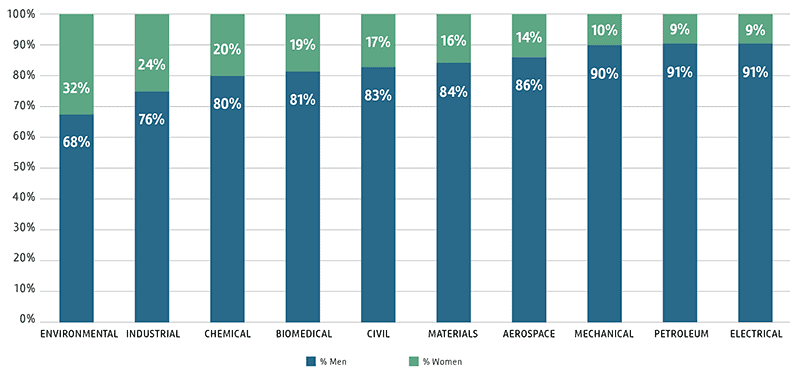
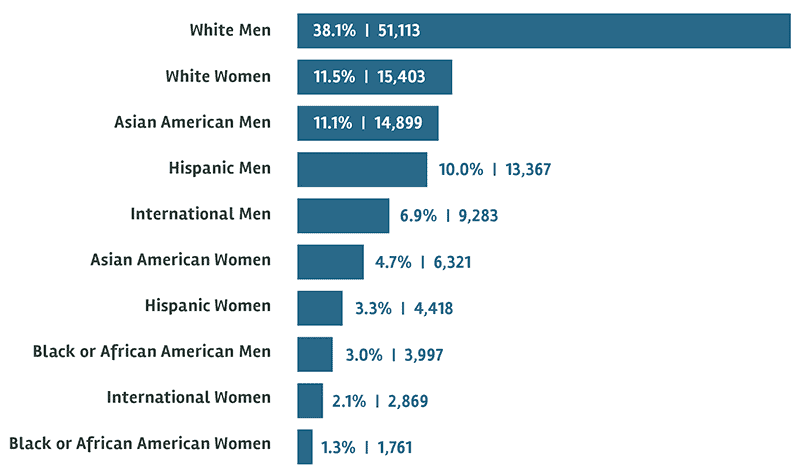
While research indicates that significant progress has been made toward achieving gender parity in many STEM fields, men considerably outnumber women among U.S. bachelor’s degrees awarded in physics, engineering, and computer science.² In fact, in 2023, 69% of engineering bachelor’s degrees were awarded to men. (For more information about engineering degrees by race, ethnicity, and gender, see this chart.) And gender disparities are even more pronounced in engineering occupations, where women comprise less than one quarter of the workforce in most fields. (See this chart.)
Reflecting insights raised in broader conversations about inclusion, particularly within computing and engineering, the literature emphasizes that women, girls, and individuals from other historically marginalized groups are fully capable of excelling in STEM; it is the entrenched institutional, cultural, and structural inequities that systematically impede their progress. This shift in focus — toward the systemic obstacles that perpetuate exclusion and away from deficit-based thinking, or the assumption that differences in performance or achievement are attributable to personal or identity-based deficiencies — aligns with a rising urgency to translate research into actionable strategies for change.
Similar to themes addressed in literature from previous years, many 2024 studies focus on the complexities of identity and belonging, exploring how race, gender, sexuality, identity formation, and class intersect to shape lived experiences across educational and professional settings. Researchers increasingly focus on how overlapping social identities — particularly racial identity and SOGIE — sexual orientation, gender identity, and expression — interact with systemic inequities to create unique challenges across educational, professional, and leadership contexts. The literature also reflects growing attention to the role of algorithmic and artificial intelligence, or AI, bias as an emerging systemic barrier that perpetuates inequities in both educational opportunities and workforce advancement. These findings expand the scope of systemic barriers but also highlight critical opportunities for intervention at multiple levels.
As in previous years, the literature reflects ongoing conversations around individual versus system-level interventions. While studies continue to emphasize the value of strategies to increase skills, confidence, and motivation at the individual level, research also highlights the need for cultural/structural shifts such as establishing nurturing affinity spaces, using inclusive instructional practices, and reforming institutional policies and approaches. This focus reflects a broader push to challenge cultural norms that have historically defined STEM environments as exclusionary spaces.
This article is based on a review of 611 peer-reviewed journal articles and conference proceedings that relate to gendered patterns in engineering, computer science, and STEM more broadly. Among these articles, 27% had a specific focus on engineering and 20% had a specific focus on computer science. A majority (51%) of these articles focused on academic/higher education, 30% focused on children or precollege teachers, and 22% focused on industry. Our review aims to strike a balance between describing the challenges that persist and highlighting actionable pathways forward. The key themes explored in the 2024 literature review include:
- Stereotypes and biases
- Gendered stereotypes and implicit bias
- Algorithmic bias in STEM career pathways
- Individual experiences in context
- Identity and belonging
- Self-efficacy, skills, and confidence
- Motivation and engagement
- Intersectionality of social identities
- Nurturing gender-inclusive environments
- Mentorship and networks as drivers of inclusion
- Institutional policies and practices
- International perspectives
Diverse, inclusive, and equitable ecosystems are necessary to foster creativity and innovation to meet the demands of the rapidly evolving STEM workforce and address global challenges such as extreme poverty and environmental degradation. Studies show that increasing the gender diversity of scientific teams produces more novel and impactful research³,⁴ and that increasing cross-gender collaboration in STEM classrooms can improve academic performance for all students.⁵ However, these interdisciplinary interventions that promote excellence in STEM rather than detract from it face increasing cultural, political, and legal challenges by ideological opponents of DEI initiatives.
Ultimately, this review reflects an ongoing call to action: How can educators, policymakers, and institutions implement structural changes that prioritize equity and justice while reimagining STEM, particularly engineering, as a space that affirms diverse identities? How might findings from this year’s research inform actionable steps that address systemic inequities at every stage — from early education through career advancement? This synthesis highlights current progress and identifies opportunities for interdisciplinary collaboration and systemic intervention with the goal of creating truly inclusive and transformative STEM ecosystems.
Percentage of Women Employed in Engineering Occupations, U.S., 2022
Stereotypes and biases
The persistence of gender stereotypes continues to pose a significant barrier to equitable participation in STEM education and professions. A key theme emerging from recent literature is the pervasive influence of societal, institutional, and interpersonal biases that shape perceptions of competence and belonging as well as career trajectories for women in engineering and related fields. Pervasive stereotypes undermine women’s confidence and discourage them from pursuing or staying in STEM fields dominated by men, such as engineering and computer science. In this section, we describe findings from 2024 research that discuss the role of gendered stereotypes and cultural biases in producing inequalities in engineering specifically and STEM more broadly. We also discuss research showing how increasing reliance on artificial intelligence and algorithmic decision-making by career counselors and industry recruiters can further entrench and institutionalize these cultural biases.
Gendered Stereotypes and Implicit Bias
A large number of studies published in 2024 underscore how societal norms and cultural expectations perpetuate the stereotype that men are more suited for STEM disciplines than women and contribute to gender disparities in STEM education and careers.⁶–²⁸ For instance, Fox-Turnbull et al.¹⁷ found that future teachers of adolescents, current engineering students, and high school students all held strong stereotypical views about engineers as being masculine.
Similarly, Batz-Barbarich, Strah, and Tay¹¹ provide evidence of societal beliefs that women’s values and abilities are incongruent with career expectations for engineers. They found that by intervening at the undergraduate level with messages that describe engineering as a field that is both communal and helps others — qualities that are perceived to align with women’s values and abilities — they could increase women’s interest in engineering majors and confidence in their ability to succeed in engineering careers. This is as opposed to describing engineering as self-directed and independent, attributes that are perceived to align with men’s values and abilities.
Gendered perceptions of who can be an engineer or STEM professional take root at a very young age. In their study of gendered beliefs among children ages 5 through 9, Shenouda et al. found that children viewed girls as less capable of learning about STEM than non-STEM subjects.²⁵ Similarly, findings from Amemiya & Bian’s research⁹ highlight how limited recognition of the structural causes of gender disparities reinforces biases at an early age, suggesting the need for continued focus on early interventions to shift perceptions of who belongs in STEM.
Gender bias is further entrenched in educational settings, where curriculum design, instructional practices, and peer interactions often marginalize women. Donnellan’s study⁸ identified visual and content-based reinforcement of traditional gender roles. The analysis revealed that women were underrepresented compared to men in textbook images. Women were less likely to be shown as scientists, in high-status roles, or associated with “brilliance,” a concept the authors describe as being associated with the computational and logical sciences of physics and chemistry.⁸ Instead, women were more frequently depicted in domestic or caregiving contexts such as homemaking, pregnancy, and parenting. The study identified patterns of invisibility, status, and domesticity that, when coded together, frame science as masculine and caregiving as feminine.
Fruhwirth et al.’s analysis of 202 German textbooks also found that men were overrepresented in images of STEM and care work occupations. These authors take this as evidence of cultural stereotypes regarding work outside of the home as men’s domain, regardless of occupation.⁷
Representation plays a crucial role in shaping perceptions that may discourage both girls and boys from considering STEM as a viable career path for women. A study conducted by Wong et al.²⁹ analyzed the responses of 1,788 secondary students in England to the question ‘Can you name any famous people in computing?’ These researchers found that the people named were predominately white men technology entrepreneurs. Only two women, Ada Lovelace and Grace Hopper, appeared in the top 10 names mentioned, and girls were 319% more likely than boys to mention a famous woman in computing and technology.
Karlin, et al.²² find that the presence of women role models and a focus on a growth mindset can help to mitigate stereotypes. This research illustrates the role of teacher biases in shaping student experiences, suggesting that teachers can foster an inclusive environment in which students view computer scientists as “anyone willing to put in the effort.” These findings highlight the need for more inclusive curricula and teacher training to challenge entrenched stereotypes.
Research published in 2024 shows that stereotypes and implicit biases also manifest in higher education and professional contexts, influencing recruitment and hiring practices, educational and career progression, and workplace dynamics. For example, Lane et al.³⁰ show that recruiters use gender as a quick heuristic shortcut when identifying potential candidates for recruitment into an online technology training program: Recruiters are less likely to initiate contact with women, particularly when they have higher workloads and less available time.
Even among women who are studying or working in engineering and computer science fields, gendered patterns regarding perceived skills and competencies drive women toward managerial roles and men toward technical roles.
A survey conducted with students in software engineering showed that men are perceived as having more technical skills while women are perceived as having more managerial skills.³¹ Similarly, a study by Jensen et al. showed that students majoring in engineering disciplines with more women students expressed more interest in managerial career paths.¹⁸ Implicit biases can also lead to men being informally mentored and trained in high-tech skills while women are not, leading more men into higher-paid, more prestigious roles in engineering and computer science fields.³²–³⁴ (See “Men Informally Mentor One Another Toward Valued Tech Roles.”)
Strategies to address gendered stereotypes and implicit bias
- Challenge stereotypes in prekindergarten to 12th grade education: Gendered stereotypes
can be mitigated by including images of women in STEM instructional materials,⁸ introducing young children to the concept of structural barriers to women’s involvement in STEM,⁹ and challenging teachers to recognize and address their own biases.²² Additionally, it is particularly important to engage young boys in interventions to address stereotypes and help make STEM climates more inclusive.³⁵ - Address recruitment practices that privilege men: For instance, removing the name and gender from applications prior to review can help recruiters assess candidates based on credentials rather than using gender as a heuristic shortcut.³⁰
- Increase opportunities for formal technical training in industry settings: Research shows that men benefit more from informal on-the-job coaching that provides them with skills to advance along technical pathways.³² Providing this type of technical training in a more formalized manner could increase the number of women in technical, as opposed to managerial, roles.
Algorithmic Biases in STEM Career Pathways
The proliferation of AI could serve to further entrench long-standing gender biases in STEM. Studies on AI describe its gendered implications both in its use for recruitment and training and for the emerging workforce that is developing AI technologies. AI algorithms are generally trained on datasets that reflect existing social inequalities, so they reinforce and exacerbate biases that disadvantage minoritized gender and racial/ethnic groups.36, 37 The historical underrepresentation of women in engineering creates a feedback loop in which AI tools used in student assessments, advising, and recruitment processes are trained in a highly gendered information environment that already understands women to be less inclined toward STEM careers, thus limiting women’s exposure to career opportunities and discouraging them from pursuing engineering.12, 38, 39
For example, a study by Blair-Loy et al.12 showed that (ostensibly gender-neutral) career assessment tools, or CATs, are less likely to recommend engineering occupations to women, even to those who are already majoring in the subject and when controlling for GPA, satisfaction with the major, and planned persistence in engineering. This study suggests that even subtle gender-normative differences — such as preferences for working with people versus things — can lead to significantly different recommendations, potentially steering women away from engineering and into more traditionally women-dominated career fields. (See “Career Assessment Tools Steer Women Out of Engineering,” p. 26-27.)
Similarly, a study of online advertisements aimed at recruiting French high school students into a college engineering program found that algorithms displayed the advertisements to boys at significantly higher rates than girls, and that this disparity decreased (though it did not disappear) if the advertisements included the word “women.”40
Studies also show that students, researchers, and potential job candidates are familiar with the limitations of AI tools and algorithmic gender biases. Research with university students in the United States, Slovenia, and Sweden indicates that women are more skeptical of and less likely to use AI tools.⁴¹–⁴³ In another study, women from racially/ethnically minoritized groups who were interested in careers in technology were interviewed about the perceived fairness of using AI in the hiring process. These women largely recognized the biases entrenched within AI processes but had varied opinions about whether these biases would be more or less pronounced than those of human hiring.³⁸ Studies published in 2024 also note a concern among computer science students that their jobs will be displaced by AI tools.⁴⁴
Both algorithmic bias in recruitment tools — such as career assessment tests — and the association between gender and attitudes toward AI could have implications for gender equity in the AI workforce. Research suggests that societal expectations, lack of role models, early discouragement from pursuing STEM subjects, lack of exposure to technological training, and perceptions of AI as a field dominated by men could all restrict women’s participation in STEM.
While articles focused on AI represent a relatively small portion of those reviewed, we anticipate that the use of AI and its gendered implications will be of increasing importance to researchers as these technologies proliferate.
Strategies to address challenges associated with AI
- Promote AI literacy and skills development: Research we reviewed suggests that integrating AI literacy into education using gender-inclusive pedagogy can dismantle stereotypes, spark interest, and encourage girls to engage in AI-related subjects.⁴⁵,⁴⁶ Beyond primary education, providing training on AI catered to women and other minoritized groups can bridge the skills gap and equip them with knowledge and confidence to pursue AI careers.⁴² Exposing women and girls to AI technology can help address anxiety and fear surrounding AI tools.⁴⁴
- Mitigate algorithmic bias: While it is difficult to ensure that training datasets used for AI algorithms are diverse and representative of the population, it is important that data be audited for potential biases. For example, Idowu et al.³⁹ examined algorithms used for student progress monitoring and found that algorithms trained using institutional data included more bias related to age, disability, and gender than algorithms trained using data drawn from virtual learning systems or assessments. Regardless of the capacity to audit training data, AI developers should be transparent in their decision-making processes to allow for scrutiny and identification of biases.¹², ³⁸–⁴¹
Individual Experiences in Context
The inherent cultural biases described above and structural inequities they produce have implications for the individual experience of people with gender identities minoritized in STEM. Research published in 2024 shows that women’s mental health and well-being can be affected by cultural biases and exclusion in educational and workplace settings.⁴⁷–⁵⁰
In their comprehensive literature review of challenges faced by women in engineering, Dabic et al.⁴⁷ explain that women often face hostile work environments — encountering both overt discrimination and more subtle microaggressions and incivility, such as having their competency doubted and contributions trivialized.⁴⁷–⁵¹ While several articles allude to mental health implications, research on the individual experience of women and LGBTQIA+ students and professionals focuses primarily on factors that influence the sense of connection to engineering or STEM (identity and belonging), sense of competence/ability (self-efficacy, skills, and confidence), and intentions to pursue/persist in STEM education and career pathways (motivation and engagement).
Identity and Belonging
A large body of research has illustrated the influence of an engineering/STEM identity and sense of belonging on persistence and success in engineering. Indeed, cultivating an engineering/STEM identity and a sense of belonging are core intentions of many efforts to improve gender equity in engineering. These efforts play an important role in promoting retention.⁵² Therefore, these themes are featured prominently in the 2024 literature, as they have been in recent decades.⁵²
Approximately one quarter of the publications reviewed this year directly address issues of belonging or identification with STEM. Belonging identity are frequently discussed in tandem because they are closely related. In one study, students from groups that are historically underrepresented in STEM fields described belonging as ‘feeling safe and comfortable in the STEM community and settings.’⁵³ Belonging is generally used to describe people’s feelings in relation to their external context. Identity, on the other hand, refers to more internalized dimensions of affinity with STEM — the degree to which people see themselves as engineers and scientists.
Prior research has shown that external recognition and acknowledgement of competence is associated with engineering identity formation and subsequent retention and success in engineering.⁵⁴ Recent studies advance this research by investigating variation in perceived recognition and the impacts of misrecognition, instances in which students experience exclusion, disregard for their contributions, and neglect of their cultural distinctiveness.
In their examination of recognition beliefs, McIntyre et al.⁵⁵ find that it is generally more meaningful for students developing their engineering identity to have their family and friends recognize them as engineers than it is for students to receive compliments from their engineering instructors or peers. However, the relationship between recognition and identity differs based on race and gender. For example, family recognition was found to be impactful for Asian, Black, Latina and Hispanic women, and white cisgender men while friend recognition was found to be impactful for Asian and white marginalized gender students.
Patrick, LeDoux, and Schley⁵⁶ further advance the understanding of recognition and identity by illuminating the dimension of misrecognition. Qualitative research involving ¹⁵ Black women and transgender and gender nonconforming, or TGNC, undergraduate biomedical engineering students at Georgia Institute of Technology showed how subtle acts of exclusion within academic settings perpetuate feelings of invisibility and isolation. For instance, participants recounted experiences of being overlooked in group assignments and classroom discussions.
Wallwey et al.⁵⁷ find that a strong engineering identity alone may not drive women to persist in engineering. External factors (such as lack of role models and marginalization experiences) and identity congruence (aligning one’s engineering identity to their other personal identities) are critical, highlighting the need for engineering programs to recognize the interplay of various identities in retention efforts.
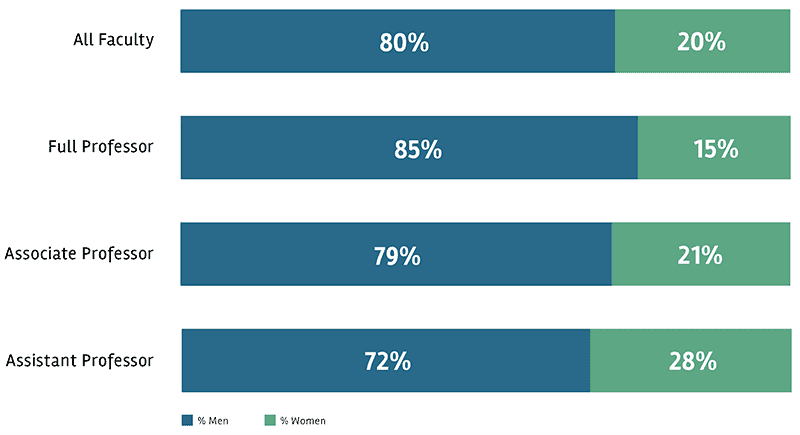
U.S. Tenure/Tenure Track Faculty in Engineering, by Rank and Gender, 2023
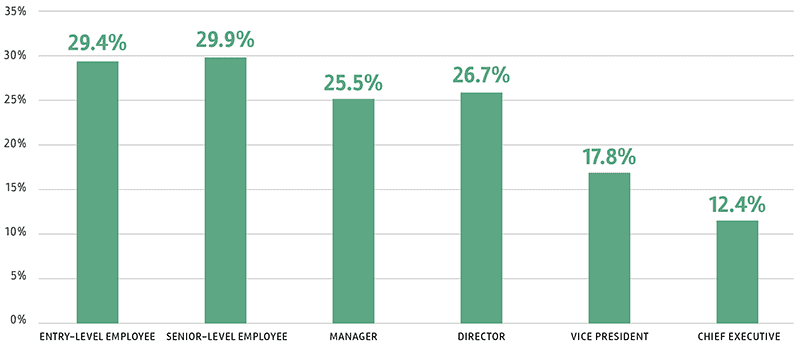
Purang, Dutta, and Biwalkar’s⁵⁸ research on women engineers in India provides an example of how identity incongruence manifests in a career context. The women in their study described efforts to re-strategize elements of their worker identity by taking short breaks from the workforce or changing roles when faced with demands outside of work. Women in this study were career-oriented but prioritized their roles as caregivers and emphasized the centrality of their personal identity over their worker identity to cope with the challenges of work/family conflicts. (For more information on women in STEM occupations by seniority level, see the chart on page 17.)
Research illustrates how small but meaningful interactions can have large implications for women’s sense of belonging in the workplace. A study by van der Marel et al.³³ shows that early in their career, women and people of color were more likely than white men to have experiences that undermined interpersonal relatedness (such as unintentionally offending a colleague or having strained collaboration). Research also shows that women transferring from community colleges to bachelor’s degree programs in computer science report greater experiences of transfer stigma than men.⁵⁹
Research by Muragishi et al.⁶⁰ suggests that women’s expectation that they will face stereotypes may contribute to uncertainty about how they will be received in STEM spaces, so the impacts of these early career and transfer experiences may have a greater impact on sense of belonging for women than for men. These authors find that microinclusions — brief interactions that reduce ambiguity, signal inclusion, and acknowledge competence — were most beneficial for women, who expect that they will be marginalized in technology workplaces.⁶⁰ Examples of microinclusions used as experimental manipulations in this study include addressing people by name, providing helpful tips and expressions of support, and crediting people for their ideas.
Studies published in 2024 also describe gendered patterns in a sense of belonging in educational contexts. For example, Master et al. showed that the relationship between gender stereotypes and girls’ participation in STEM was mediated by sense of belonging — that the negative impact of gender stereotypes on adolescent girls’ sense of belonging in STEM was a primary driver of underrepresentation in computer science courses.²⁴
Barrett et al.’s qualitative study suggests that this underrepresentation has cumulative effects further down the line. Their study shows that limited early exposure to computing relative to their men peers adversely affected women’s sense of belonging in computer science in college.⁶¹ Overall, this research shows that creating affinity spaces for women in engineering/STEM is an important strategy for improving sense of belonging.⁶²,⁶³
Strategies to strengthen engineering/STEM identity and sense of belonging:
- Cultivate inclusive and supportive environments: It is important to continue working to improve the culture of engineering/STEM to be more inclusive of people with minoritized gender identities.⁵² This includes preventing and addressing instances of exclusion, subtle acts of bias, and disregard for contributions. Strategies to promote inclusion and recognition include addressing people by name, offering support, giving people credit for their ideas, creating diverse teams, and providing training on effective communication to teachers and employers.⁵⁵–⁵⁶,⁶⁰,⁶⁴
- Establish affinity spaces on college campuses: Affinity spaces such as identity-specific STEM student organizations (like the Society of Women Engineers collegiate sections) can serve as affirming spaces for students to build community, counter negative stereotypes, and develop their engineering/STEM identity. Affinity spaces — whether physical, virtual, or hybrid — offer students a platform to share experiences, build networks, and engage in advocacy. These spaces can be integrated within academic institutions, professional organizations, or extracurricular programs and should be resourced to support their longevity.⁶²,⁶⁵–⁶⁷
- Enhance mentorship and role models: Mentorship opportunities tailored to the specific needs of women and individuals from other marginalized groups can help support belonging and identity. In particular, it is important for students and early-career professionals to have access to mentors who share their identities.⁶⁸ Ensuring women have access to role models in STEM who share their identities can help counter the lack
of representation and make space for identity development.⁵⁷
Self-Efficacy, Skills, and Confidence
Pervasive gender stereotypes can influence self-perception and limit women’s confidence in STEM, even when actual abilities are equivalent. The 2024 literature explored gendered patterns in confidence and self-efficacy across a variety of contexts.⁹,⁷⁰–⁷³ For example, Morán-Soto and Benson⁷⁰ examined the relationship between mathematics self-efficacy and mathematics anxiety among first-year engineering students in Mexico, finding men generally reported higher self-efficacy and lower anxiety compared to women. This study emphasizes the compounding effects of anxiety and a lack of self-efficacy, which can act as deterrents to persistence in STEM fields. Similarly, Kruskopf et al.⁷⁴ examined Finnish teachers’ preparedness to instruct information and communications technology, or ICT, competencies. Their findings reveal significant disparities in self-efficacy along gendered lines. Men studying to be teachers consistently reported higher confidence in their ability to teach both practical and algorithmic ICT skills, reflecting broader societal patterns in which women lack confidence in STEM fields.
Vieira et al.’s analysis of data from a survey of more than 2,000 students in Australia from grades 6 through 12 showed that, in general, boys had higher creative self-efficacy, or CSE, (“the belief that one is capable of producing original solutions”) than girls.⁷⁵ The relationship between gender and CSE was particularly strong in STEM domains.
In discussing their findings, these authors cite previous research stressing that “although no differences in creative capacity between females and males exist, the way that they perceive themselves is significantly different. That is, apart from misjudging their own creative abilities, females also face the challenge of thriving in a context where males often overestimate their CSE.”⁷⁵ They found that CSE was also associated with intention to pursue further education in STEM, highlighting its potential influence on educational and career pathways.
Ananthram, Bawa, and Gill⁷⁶ also examined how confidence and self-efficacy relate to career intentions. Women STEM students in the study reported greater commitment to their career choices than their men peers, suggesting they have developed a strong sense of purpose and alignment with their chosen fields. However, these same students expressed lower confidence in their ability to reconsider career paths or adapt to alternative trajectories, indicating a rigidity that could stem from systemic pressures or limited perceived options.
The findings reveal an important tension: While women in STEM may display remarkable resolve and clarity about their goals, they may also feel constrained by the weight of those commitments, particularly in environments in which adaptability is key. This duality resonates with broader discussions in the literature about the influence of stereotypes and structural barriers on women’s experiences in fields dominated by men. For instance, Ertl et al.⁷⁷ argue that women who persist in STEM have often already confronted and surpassed significant challenges, which can foster confidence in their current path but limit their perceived flexibility.
Research published in 2024 provided examples of curricular interventions that could help improve gender equity in confidence and self-efficacy. The justice-centered data structures and algorithms (DSA) course for non-computer science majors discussed in a study by Batra et al.⁴⁶ showed that the innovative pedagogical approach increased computing confidence and sense of belonging, particularly for women, nonbinary, and other students not identifying as cisgender men, though disparities persisted. Another study conducted by Sperling et al.⁷⁸ examined the outcomes of a first-year engineering course integrating design-focused, project-based learning that involved hands-on prototyping and client-based projects. This study found that the course fostered self-efficacy and professional skills among undergraduates, particularly women students, though the magnitude of these effects varied by race/ethnicity.
By connecting these patterns to broader career development theories, these studies challenge educators and policymakers to rethink how STEM curricula and career support systems can promote both confidence and adaptability. What would it look like to design initiatives that validate students’ career identities while also equipping them to navigate shifts in an unpredictable job market? The findings from these studies suggest that nurturing confidence and self-efficacy can play a role in increasing women’s participation in technology fields by challenging gendered perceptions of creativity and equipping all students with such skills as innovative problem-solving and adaptability.
However, findings also complicate the prevalent narrative that lower self-efficacy is a primary driver of women’s attrition. Pedersen and Nielsen’s⁷³ study of university students in Denmark showed that while women report lower levels of self-efficacy than men across both STEM and non-STEM fields, they do not leave non-STEM fields at the same rate that they leave STEM fields. This indicates that self-efficacy has limited explanatory power in predicting STEM dropout rates and suggests that systemic and cultural factors play a more significant role.
Motivation and Engagement
Gender is also related to the motivation to pursue and persist in engineering and STEM, according to research published in 2024. For instance, Jiang and Simpkins⁷⁹ analyze how parental STEM support influences adolescents’ motivational beliefs in math and science and their eventual selection of STEM majors, focusing on gender and whether they were the first in their family to attend college. Using data from a study of 12,070 U.S. high school students between grades 9 and 12, they found that women who were first-generation college students had the lowest levels of parental support and math and science ability self-concepts (individual beliefs about one’s ability to succeed in a particular domain) and were less likely to express an intention to pursue a STEM major. They argue that these findings reflect the impacts of multiple marginalization.
Blosser¹³ approaches the issue from another angle, focusing on what motivates women to pursue engineering. By interviewing 35 women from diverse backgrounds, Blosser shifts the narrative from what deters women to what empowers them. Primary motivating factors include family support, teacher encouragement, and the desire to dismantle gender stereotypes. This research reminds us that creating inclusive spaces in STEM starts long before someone enters the workforce.
One strategy for helping motivate girls to persist in STEM is showing them its relevance to their lives. A study by Leammukda et al.⁸⁰ showed that when the STEM curriculum connected students to their community and lived experiences, learning became more meaningful and engaging for girls.
Strategies for increasing confidence and motivation to pursue engineering/STEM among women:
- Design socially relevant curriculum: Research shows that learning is more meaningful and engaging for girls when they see how STEM subjects connect to their own lives and that women may be drawn more to fields that emphasize social impact.⁵²,⁸⁰ Socially relevant curricula can also increase girls’ confidence and self-efficacy in STEM fields.46,78
- Invest in strategies to engage families in encouraging girls to pursue STEM studies: Support from parents can play a key role in girls’ motivation to pursue STEM studies.79 Investing in interventions designed to encourage parent support for girls pursuing STEM could help increase girls’ participation.
Intersectionality of Social Identities
Research exploring intersectionality in STEM contexts highlights the interconnectedness of social identities, such as gender, race, sexuality, ability, and socioeconomic status, and the compounded effects of these identities on experiences and opportunities.⁸¹ Research focused on intersectionality reveals how overlapping identities can shape experiences of access, belonging, and success in STEM fields.⁸² The 2024 work in this area emphasizes the importance of recognizing and addressing the complexities of marginalization to foster equitable, inclusive, and transformative practices in education and professional environments. This research also highlights how sociocultural context overlays the experience of women in STEM, in some cases adding another dimension of marginalization.
Consistent with research published in 2023,⁸³ most intersectional studies published in 2024 focused on race and gender, examining the experiences of Black women and other women of color.⁵⁶,⁸⁴–⁹³ For example, Williams et al.⁸⁸ use semi-structured interviews and focus groups to examine how Black women navigate identity formation. The study is grounded in intersectionality and Black feminist thought, which centers the lived experiences, knowledge production, and resistance of Black women to the dominant power structures and highlights the interconnectedness of race, gender, class, and other systems of oppression.⁹⁴ The study finds that participants view technical proficiency, societal impact, and resilience as key requirements of being a computer scientist. However, stereotypes, invisibility, and others’ doubts about their expertise undermine their identification with computer science. Further, many participants wanted to solve societal problems using CS but felt hindered by limited resources and competitive environments. This duality illustrates how external inequities exacerbate internal conflicts, complicating identity development.
In their examination of Black undergraduate women in computing, Willis and Freeman⁸⁶ examined students’ identity conflicts and educational motivations in relation to the institutional settings in which they study, revealing a clear disparity between experiences at historically Black colleges and universities, or HBCUs, and predominantly white institutions, or PWIs. The research found that HBCUs offer a supportive and empowering environment that significantly mitigates identity interference and enhances students’ intention to remain in their field of study compared to students in other institutions. Another assets-based study focusing on the persistence of women of color in engineering despite significant institutional barriers shows that accessing, accumulating, and activating “engineering capital” supports engineering degree completion among diverse, high-achieving women.⁹⁵ (See “‘Engineering Capital’ Key to Women’s Pursuit of Engineering.”)
As a whole, studies examining the experience of women of color highlight the importance of moving beyond a focus on numeric diversity. These studies encourage institutions to address deeper, systemic challenges these women face and shifting the goal from resilience to thriving. These studies illustrate the need to create environments that recognize and value the contributions of women of color, fostering the development of identity-based communities and strengthening professional networks for women of color in engineering. They also reveal how community-building practices and inclusive pedagogies can align with Black women’s societal contribution and collaboration values.⁸⁸
Expanding this discussion to include queer perspectives reveals additional axes of marginalization that further complicate identity navigation in STEM education, allowing for a broader inquiry of how systemic inequities operate across multiple, overlapping dimensions of identity.
The systemic exclusion and marginalization of LGBTQIA+ individuals within STEM fields reveal deeply entrenched cultural biases that privilege cisheteronormativity, hypermasculinity, and the erasure of identity. As highlighted in Marosi et al.’s systematic literature review,⁹⁶ LGBTQIA+ students, faculty, and professionals in STEM fields consistently encounter unwelcoming environments characterized by hostility, invisibility, and overt discrimination. STEM’s dominant culture often equates professionalism with the erasure of personal identity, viewing expressions of queerness as subjective, political, or disruptive to the ideal of an unbiased, apolitical environment. While nuances exist across STEM disciplines — biology, for example, is perceived as relatively more inclusive compared to mechanical engineering — this framing reinforces exclusionary norms that marginalize queer individuals within STEM spaces.
For instance, the pervasive “dude culture” in engineering reinforces a dichotomous framework in which technical expertise is aligned with heteronormative masculinity, delegitimizing queer and feminized identities as incompatible with the ideals of a “serious” STEM professional.”⁹⁷,⁹⁸ Conflating heteronormative masculinity with technical expertise invalidates the knowledge and competence of queer and feminized individuals, creating a hierarchy in which social issues and identity are seen as separate from technical work, making STEM less equitable and discouraging queer visibility.
Moreover, findings from the research on LGBTQIA+ individuals in STEM emphasize interpersonal experiences that include verbal harassment, professional devaluation, and exclusion from collaborations or resources, resulting in tangible career consequences.⁹⁹,¹⁰⁰ Studies published in 2024 indicate that these consequences manifest in various ways, including limited access to technical jobs and research opportunities,⁹⁹ being excluded from professional networks and group proposals, and facing skepticism regarding their competence from colleagues and peers. Additionally, experiences of persistent misgendering, inappropriate questioning about sexual orientation, and derogatory comments contribute to a hostile work environment that can deter career advancement, prompt individuals to leave institutions or the field entirely, and negatively impact their mental well-being and productivity.
At the individual level, such exclusion manifests as psychological distress, additional cognitive burdens, and fractured belonging. Queer individuals often feel compelled to hide or cover aspects of their identities, known as masking, to navigate these spaces. This emotional and professional toll is compounded by the absence of visible role models, mentoring networks, or institutional interventions that affirm queer identities.¹⁰¹,¹⁰²
In examining the experiences of transgender and gender nonconforming, or TGNC, students within engineering spaces, Johnson and Bothwell¹⁰³ highlight the interactions between intersectionality, spatiality, and systemic exclusion. They define spatiality as the ways in which physical and social spaces are constructed, maintained, and experienced, particularly in relation to power structures and identities. These authors build off prior research indicating that engineering, long characterized by depoliticization and meritocratic ideals, often demands identity concealment from marginalized individuals, a phenomenon particularly acute for TGNC students who navigate environments entrenched in whiteness, heteronormativity, and cisnormativity.¹⁰⁴,¹⁰⁵
Percentage of Women in STEM Occupations by Seniority, Global, 2023
Johnson and Bothwell¹⁰³ use critical collaborative ethnography to examine how TGNC students’ experiences in engineering are shaped by the intersections of geographic, institutional, and social contexts. Their interpretive approach prioritizes the lived realities of TGNC students, challenging traditional research hierarchies that often position researchers as objective observers rather than collaborators. The authors argue that engineering’s depoliticized culture systemically sidelines discussions of race, gender, and sexuality by presenting technical knowledge as neutral and apolitical.
In engineering classrooms, where cisgender and heterosexual norms dominate peer interactions, TGNC students face discrimination, microaggressions, exclusion, and silencing, often forcing them to engage in identity concealment and environmental surveillance to navigate engineering spaces safely.⁶⁶,¹⁰³ For these students, spaces outside of engineering, including activist student organizations, LGBTQIA+ networks, and humanities classrooms, offer essential sites of resistance and affirmation, signaling the potential for alternative cultural models to emerge within STEM.103
By centering intersectionality, Johnson and Bothwell complicate the narrative of diversity and inclusion in engineering education. Their work examines whether STEM programs can achieve equity without addressing the politicized realities of identity and explores ways educators might create learning environments that affirm, rather than constrain, the complex selves of TGNC students. They found TGNC students experienced the most affirmation outside engineering spaces, suggesting that engineering programs must build stronger interdisciplinary connections to provide safe spaces. These considerations demand not only curricular reform but a paradigmatic shift — transforming engineering into a field in which diverse identities are visible, valued, and celebrated as integral to its cultural and intellectual future.
These syntheses raise critical questions: How can STEM reimagine its cultural norms to affirm diverse identities without reducing them to mere tokens of inclusion? Can equity efforts move beyond deficit-based framings of queer experiences to emphasize their transformative potential within STEM? These studies serve not only as diagnostic lenses for systemic exclusion but also as provocations for interdisciplinary action in which technical and social spheres converge to reshape the future of STEM as a truly inclusive field.
Nurturing Gender-Inclusive Environments
A major theme in the 2024 literature was the continued need for investment in supportive environments to attract and retain women in engineering/STEM. Most articles discussing efforts to nurture gender-inclusive environments focused on the topics of mentorship and network building. Indicative of a broader shift toward research examining efforts to address systemic issues rather than “fixing” individuals, the 2024 review also includes studies that call attention to institutional policies and practices that impact the inclusion of people with genders minoritized in engineering and STEM.
Strategies to foster increased inclusion and persistence for people with multiple marginalized identities:
- Invest in engineering programs at historically Black colleges and universities: Continued support and expansion of engineering programs at HBCUs are critical for inclusive learning environments. Support may include funding for curriculum development, faculty research, infrastructure improvements, and student support services. Strengthening partnerships between HBCUs and industry also enhances students’ access to internships, co-op programs, and career pathways that affirm their identities and experiences.⁸⁶
- Emphasize training on inclusivity and cultural competency: Providing professional development opportunities for educators focused on inclusive teaching practices and cultural competency is essential. This includes training on how to identify and counteract implicit biases, integrate diverse perspectives into STEM curricula, and create classroom environments in which all students feel valued.85 This also includes supporting educators and supervisors in developing practices to provide recognition in an equitable manner.⁵⁵
- Provide opportunities for professional development in a supportive environment: For students and professionals, structured networking events, mentorship programs, and leadership workshops can strengthen engineering identity, particularly for individuals navigating intersecting forms of marginalization.⁸⁸
- Increase access to financial resources: Targeted scholarships, grants, and financial aid programs designed to support historically underrepresented students can mitigate economic barriers to STEM education. Coupled with social and academic support, these resources help students transition smoothly from high school to college and beyond.95 Investment in resources to support hands-on learning experiences in under-resourced areas also shows promise for reducing disparities in educational opportunities and fostering early interest in STEM among diverse populations.¹⁰⁶
Mentorships and Networks as Drivers of Inclusion
The persistent gender disparities in STEM education necessitate a deeper exploration of factors that encourage women to pursue engineering majors. Strong mentorship and professional networks play an essential role in creating the kind of environment in which women, particularly those from other historically underrepresented groups, can succeed. Articles reviewed in 2024 show how mentoring and network relationships provide critical support, open doors, and foster a sense of belonging in fields that can often feel unwelcoming to marginalized students. From intersectional mentorship models to cohort-based initiatives, these works explore practical ways to help individuals navigate systemic barriers and succeed in their fields.
This section focuses on how mentorship and networks can drive meaningful change by promoting inclusion, supporting career growth, and creating spaces where diverse talent can thrive.
Brown et al.⁶⁸ capture this dynamic through their case study of seven mentoring pairs. They show how meaningful mentorship is not just about career advice but also about recognizing and responding to systemic racism and sexism. They highlight how mentors can help women doctoral candidates build resilience and aspirations by engaging in tough conversations and leveraging their own institutional power. However, they do not gloss over the challenges, pointing out that many mentors still struggle to navigate intersectional identities effectively.
Programs that prioritize community and intentional support take this a step further. Napier and Bourgeois⁸⁴ highlight the success of the RISE in Computing Scholars program at Georgia State University, which supports Black women in computer science through mentorship, workshops, and tutoring. They found that participants felt a stronger sense of belonging and gained confidence, with 75% of participants meeting program requirements and reporting improved perceptions of computing as an inclusive field. Similarly, Pearson et al.¹⁰⁷ argue that systemic exclusion hinders Black women’s participation in computer science education research; however, fostering supportive mentorship programs can help amplify their contributions and challenge inequities in the field.
Mentorship is not always formal. Luhr³² sheds light on how informal coaching and mentorship shapes career trajectories in Silicon Valley, revealing stark gendered disparities that perpetuate occupational segregation in technical roles. Unfortunately, this type of mentorship often reinforces existing inequities — men reap the benefits, while women are pushed to the margins, often into nontechnical roles or “diversity work.”
Smith¹⁰⁸ applies a positive psychology lens to explore career sustainability among women in engineering, identifying psychological factors, such as navigating sexism, self-concept, and stress management, and environmental factors, such as social supports and workplace characteristics that contribute to career persistence. Using phenomenological analysis of interviews with¹⁴ women engineers, the study emphasizes adaptive strategies like work/life balance adjustments, mentorship, allyship, and self-advocacy that enable persistence in a field where men are the majority.
Cruz and Nagy’s study⁴⁹ of more than 500 women in STEM occupations dominated by men provides additional evidence that interpersonal strategies, such as collaborating with other women and engaging in advocacy, are strong protective factors and are bolstered by strong mentorship and support networks. These studies show that social supports, including workplace allies and professional organizations like SWE, are essential for navigating systemic challenges and supporting women’s persistence in engineering.
The 2024 research also identified mentorship and peer networks as pivotal for fostering belonging and mitigating the phenomenon of self-doubt common in scientific spaces within academia and industry known as “imposter syndrome.” While understood as an internalized sense of inadequacy despite evident qualifications, the term can obscure systemic barriers by framing structural exclusion as a personal psychological issue. Access to mentorship and peer networks support remains inconsistent, posing critical questions about how institutions can systematically promote inclusion.
Institutional Policies and Practices
A handful of studies published in 2024 highlight specific institutional policies or practices that could help increase gender equity. Rather than acting as a “Band-Aid” to help mitigate the effects of gender bias, these policies address institutional barriers and place the onus of change on the system rather than the individual.
Boivin, Täuber, and Mahmoudi109 note that workplace policies can either perpetuate or mitigate gender stereotypes, and they stress the need for increased institutional accountability. These authors argue that primarily performative measures cannot address persistent gender bias in STEM and that increased inclusion of women in STEM (and associated changes in cultural perceptions) should start by linking funding to improved performance regarding gender equity. Some examples of changes that could help improve gender equity include improved family caregiving policies, policies to improve wage equity, changes to tenure and promotion policies, and changes to curricular content and structure. (For more information on U.S. tenure of tenure and tenure track in engineering by gender, see this chart.)
Research on women in engineering frequently discusses the challenges of balancing a career with family caregiving, given sociocultural expectations that women will assume primary family care responsibilities. Scheduling informal networking activities such as after-work drinks can exclude those with child-rearing responsibilities or other caregiving obligations, disproportionately impacting women.¹¹⁰
Studies published in 2024 also identify formal policies that have a disproportionate impact on women. For example, expanded family leave policies and child care assistance could support increased participation of women in STEM.¹¹¹–¹¹³ While some research suggests that increased flexibility and remote work opportunities could support women in STEM, other research cautions that work-from-home arrangements can exacerbate existing inequalities if accompanied by expectations that more time at home equates to more unpaid care or other domestic labor for women.¹¹⁴
Research also suggests practical measures employers can take to address the gender wage gap in engineering. A key recommendation is to provide transparent pay information, which helps identify and address discrepancies, foster fairness, and build trust.¹¹⁵,¹¹⁶ Providing standardized salary structures in the hiring process can reduce the “gender ask gap” in salary negotiations.¹¹⁷ By proactively conducting salary reviews and adjusting salary structures as necessary, employers can reduce reliance on individual advocacy and shift responsibility for addressing the wage disparity to the institution.¹¹⁵ This research also stresses the importance of engaging university career services in helping narrow the wage gap in STEM fields.¹¹⁸
Bachelor’s Degrees Awarded in Engineering in the U.S. by Selected Race, Ethnicity, and Gender Categories in 2023
The need for increased transparency also applies to tenure and promotion policies within academia. (See this chart.) Research suggests that women of color in particular are disadvantaged by nebulous policies, unclear performance expectations, and inequitable workloads.¹¹⁹ In fact, a 2024 study conducted by Baker and Koedel indicates that some progress has been made toward narrowing the gender gap among faculty in STEM fields overall, but that gaps in racial/ethnic diversity have widened over the past decade.120 Improved training for tenure and promotion committees along with clear expectations regarding course assignments and department service could improve equity in promotion and tenure in academia. Department chairs can also play a pivotal role in career progression, so it is important to equip them with an understanding of the gendered and racialized experiences of faculty in STEM and ensure their commitment to improving equity.⁹²,¹²¹
Studies published in 2024 also suggest ways that course content, curricular structure, and pedagogical approach could help improve gender equity in engineering/STEM education. For example, Lionelle et al.¹²² find that degree programs with more curricular complexity (e.g., more courses that must be taken in sequential order) tend to have fewer women. The researchers recommend eliminating barriers by providing multiple degree pathways, offering flexibility for when required courses such as calculus must be completed, and requiring a smaller number of core courses. Women’s engagement in computer science and engineering education can also be improved by providing increased opportunities for active learning and socially relevant course content.¹²³,¹²⁴ Research also suggests that the competitive nature of grading systems and competition-based instruction can be barriers to women’s participation.¹²⁵,¹²⁶
International Perspectives
Almost half of the articles published in 2024 examining gender in engineering and STEM were based on research conducted outside of the United States. In this review, we exclude non-English articles due to capacity limitations. We acknowledge that this limits a comprehensive understanding of the research on gender and engineering globally but hope those published in English are representative.
The largest portion of studies discussing contexts outside the U.S. involve countries in multiple regions. Several of these studies are meta-analyses, literature reviews, or bibliometric analyses, though some are cross-comparative studies of a small number of countries in different regions. There are also several studies examining multiple countries within a single region, specifically Latin America, Europe, and Africa. Of the single-country studies occurring outside of the U.S., those with 10 or more studies include the United Kingdom (15), China (14), Germany (14), India (12), Australia (12), Spain (10), and Brazil (10).
Most studies conducted outside the United States explore themes that cut across specific cultures and geographic contexts, such as the role of education in shaping perceptions and participation in STEM,53,70-71,73,127-132 the challenges women face in STEM education and career pathways,47-48,110,112,113,133-138 and the importance of institutional practices and mentorship networks for supporting women’s persistence in STEM.6,139-142
While these articles frequently discuss themes that transcend geography, several studies provide insights into the experiences of women in STEM within specific regions and countries. Discussion of studies occurring outside the United States have been included throughout this review where they are thematically relevant. In this section, we focus on findings specific to a particular regional context/culture.
Research on the experience of women in India examines the unique influence of the caste system and its interaction with gender. Sud and Ramanujam143 explain that while caste-based discrimination is illegal, “the caste system is kept alive by social practices in society and among the scientific community.”
Kumar and Sahoo144 examined how caste and gender intersect to shape STEM education pathways in India, revealing persistent gender gaps and caste-based disparities. While economic and educational inequities partly explain caste gaps, gender gaps remain largely unexplained by observable factors. Prakash and Yadav145 similarly examine the effects of caste, finding that men from marginalized social groups fare worse in terms of employment than women from marginalized groups in most occupations aside from engineering, where women remain underrepresented.
In Sub-Saharan Africa — where engineering courses have some of the lowest female enrollment globally128 — research shows that broad cultural expectations regarding gender roles and male dominance are reinforced in academic settings.10,146 In this context, young women who persist in STEM despite cultural barriers exhibit a strong commitment to STEM career goals and tend to be supported in this pursuit by fathers or other influential men in their lives.10,128 The finding regarding the key role of support from men is similar to findings from a Saudi Arabian study showing that women STEM pioneers attribute their persistence in STEM, in part, to the support they received from fathers and other influential men.147
A large number of international studies published in 2024 were conducted in Latin America. Similar to themes discussed throughout this article, many of these studies focus on the role of gender biases and stereotypes in shaping the educational and career trajectories of girls and women148,149 These studies also discussed workplace climate and the sometimes hostile environment that women STEM professionals face. For instance, studies in Brazil reveal pervasive workplace challenges in software engineering and ocean sciences. Oliveira et al.,150 describe challenges faced by women in software engineering including harassment, witnessing distasteful jokes, and other comments reinforcing stereotypes, as well as general feelings of insecurity. Maia et al. describe bullying and harassment of women scientists aboard research vessels.151
Research conducted in East Asia describes how attitudes regarding traditional gender roles and the ideology of women’s domesticity can limit access to engineering pathways. In particular, Wang and Jin152 illustrate the impact of parental gender role attitudes on children’s choices of a major, finding that mothers who hold traditional notions of gender powerfully influence their daughter’s choices to pursue majors outside of STEM. Choi finds that traditional gender ideologies held by students at a school for women in Japan limited their motivation to pursue engineering.153
Findings from international studies illustrate global patterns of challenges faced by marginalized groups, such as gender and racial disparities, and highlight how broader social inequalities perpetuate systemic exclusion in education. By illustrating how cultural context and gender interact to influence STEM pathways, international research invites a global reexamination of equity initiatives in educational systems, pushing for interventions that acknowledge and disrupt deeply embedded social hierarchies.
Conclusion
This year’s review of social science literature brings to light the persistent challenges and promising strides toward addressing systemic inequalities in engineering and STEM. At the heart of these findings lies the role of community and organizational culture, particularly the need for acknowledgement and understanding of the factors driving persistent gender gaps.
Lack of recognition regarding structural and cultural barriers to the full inclusion of individuals with marginalized gender identities in engineering and computer science remains challenging.121,154 Broadening participation in STEM through evidence-based strategies bolsters creativity, reduces biases, and enhances problem-solving, which are critical for driving scientific and technological innovation.
Moreover, ensuring equitable access and advancement in STEM not only rectifies long-standing disparities but also strengthens our capacity to meet the demands of a rapidly evolving global economy. Our collective efforts to advance diversity, equity, and inclusion are not peripheral to STEM success; they are foundational to building a resilient, innovative, and robust STEM workforce for the future.
This year’s literature touches on the ways that processes unfolding within engineering/STEM arenas are connected to broader social, technological, and ecological forces. For example, this review emphasizes the need to center transgender and gender nonconforming voices in STEM gender equity efforts. While there were several studies focused on the experience of LGBTQIA+ individuals, research on gender in engineering and STEM continues to rely predominantly on binary frameworks, leaving gaps in understanding and inclusion.
Research published in 2024 illustrates the continued need for intentional strategies to provide tailored support for historically marginalized groups, including women and LGBTQIA+ populations, while simultaneously working to address issues in the structure and operations of STEM education and industry that perpetuate gender disparities. For example, affinity groups such as those serving women in computing can provide a venue for nurturing belonging and developing a strong social and professional network. Reforming engineering curricula to include more flexibility and social relevance can reduce barriers and make engineering more appealing to women and other underrepresented groups.
Women who stay in engineering are supported in doing so by developing strategies to navigate sexism, stress, and self-concept issues, and by receiving external social support and working in organizations that recognize their competence.108 This research reinforces the notion that it is essential to engage in the incremental process of addressing the culture and climate of engineering while also attending to the individual needs of women functioning in the system as it operates today.
This year’s studies point to a growing alignment of vision, action, and transformation, with interventions increasingly focused on systemic changes and collaborative efforts. These developments provide clear opportunities for educators, mentors, policymakers, and researchers to move beyond individual-based framing and deficit-based thinking. Research suggests that these critical actors should work toward structural reforms that create affirming and equitable environments that sustain and offer support across STEM career trajectories and ultimately build a strong STEM workforce. Such reforms should begin from early exposure before kindergarten through to precollege education, through higher education, through advancement in STEM careers in academia and industry.
Looking ahead, we encourage continued bold efforts to make STEM a space where all identities are not only represented but genuinely valued, celebrated, and supported. The work of transformation is ongoing, and research provides clear recommendations for a path forward.
Literature Review Sidebars
Men Informally Mentor One Another Toward Valued Tech Roles
‘Engineering Capital’ Key to Women’s Pursuit of Engineering
Career Assessment Tools Steer Women Out of Engineering
References