


“Why weren’t we ever taught this at university?”
Jo Filshie Browning, a science communications consultant and author, has heard this sentiment from dozens of scientists she counsels on best practices for communicating their work to the public. A former journalist, Filshie Browning now helps experts hone their messages and establish clear communications objectives.
Science and engineering advancements are some of the most exciting things happening in the world right now, notes Filshie Browning. “Science really matters and there is so much that is good to say about it. And yet, in an increasingly politicized world, if we don’t teach communication skills alongside it, the risk of misinterpretation, miscommunication, or just misunderstanding is huge.”
So how do science and engineering experts best communicate the details and importance of their research or projects to lay audiences? Here’s a rundown of how to hit the right marks when communicating about technical topics.
1) Don’t: Assume that the work speaks for itself
Science and engineering don’t speak for themselves; we have to speak for them, says Filshie Browning. Certain research may have ramifications that seem incredibly obvious to you but lay audiences may need help understanding and deriving meaning.
She encourages engineers to share information following the “three I’s”:
- Information
- Interpretation
- Implication
“This is the information. This is how I interpret it. And therefore, the implication is this,” explains Filshie Browning.
For instance, a study comes out showing that a new treatment for a disease is 50% effective. Is this the best news? Or an absolute disappointment?
Here, the interpretation is key. If there is currently no treatment, then a new treatment that’s 50% effective is great news. But if other treatments are currently available that have better success rates, then the new treatment isn’t impactful. But the news can still be important for patients to know. The implication is: “We tried, and we discovered it didn’t work. So, we’re taking those learnings and we’re looking elsewhere,” Filshie Browning says.

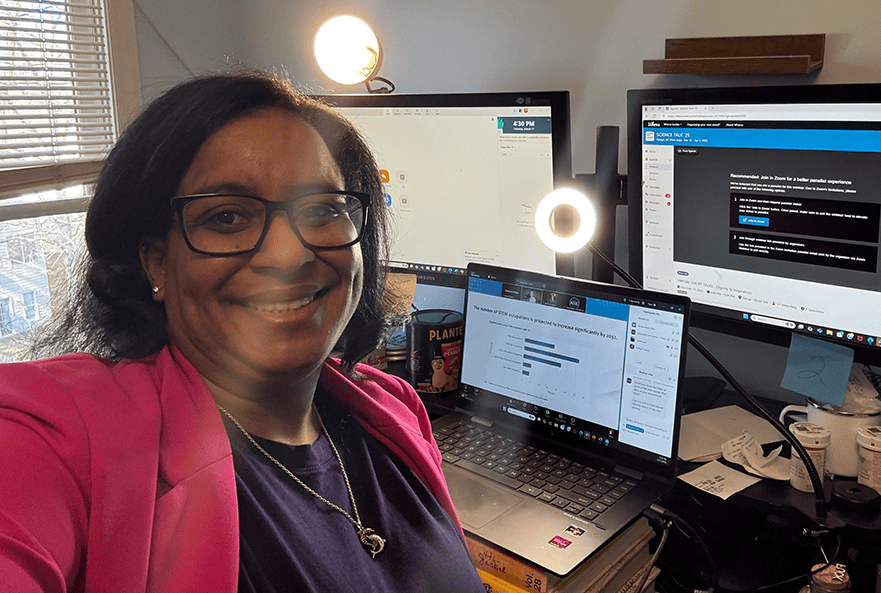
2) Do: Prioritize communication as a skill
Tamara Poles discovered a passion for science communication during her undergraduate studies when she realized how many science labs were working on very interesting research, yet how few could explain it in a way most people could understand. Poles went on to launch Universal SciComm to teach scientists and technical experts how to be good communicators of their work.
Science communication is not simply experts “dumbing down their research” — a phrase that Poles greatly dislikes. “It’s making it more accessible to people,” she clarifies.
If you want to be better at communicating your technical area of expertise, you have to be willing to practice, she says. “This is a skill. You have to be flexible and know that it’s a learning process … you aren’t going to be perfect right away.”
Filshie Browning agrees, noting that often, experts will spend a significant amount of time on a research paper, but no time looking at the press release about it. Yet this is the piece that more people will actually read. “You might be the best engineer, amazing at what you do … but if you cannot communicate it, then there’s no way anybody is going to appreciate your work. Your [inadequate communication skills] are a limiting factor,” she says.
3) Do: Establish a goal
When Filshie Browning began working in public relations, she realized that professional communicators always had a goal for their initiatives — ones they could measure to determine success.
“Why are you communicating with the general public about this thing?” she asks. “Is it because you’re proud about it and you want to share it with the world? Usually, not. Usually, there’s a business case for it.”
Filshie Browning recommends first determining your goal and then targeting your communication toward your audience. With that stakeholder in mind, ask what you want them to think, feel, and do.
For example, if you’re working on a municipal infrastructure project and you’re presenting the proposal to the city’s planning commission, your think, feel, and do are very specific. “We’d want them to think that the project is a good idea and will benefit the population that they represent,” says Filshie Browning. “You would want them to feel compelled to do it, like it was almost irresistible as a goal. To feel confident that this is exactly the right thing to do.”
The do would involve casting a yes vote or removing obstacles to the work being done.
4) Don’t: Bury the lead
Technical experts tend to communicate STEM topics the way they’ve researched them: following the scientific method. They share the hypothesis and then set up the details of the experiment, including how they looked into the problem and the methodology. Then, they report the results and, finally, the conclusions they drew.
It’s the opposite of communicating with a lay audience.
“You need to start with the conclusion,” says Poles. You’re not trying to build up to it or create anticipation. “If you found the cure for cancer, start with that,” she says. Think of that introduction as an accurate but attention-grabbing headline.
“Within that first second, they should know immediately what you’re talking about and why they want to learn the rest,” says Poles. “You don’t hide things from people because they’re not going to be interested.”
5) Do: Share your story in different ways — including using analogies
Not everyone learns the same way, says Poles. You need to be ready to help different audience members understand using different methods. You can start by stating the facts, but for many learners, “you need to have a picture, or you need to show them, or you need to have them do [something],” she says.
Whenever possible, Poles likes to create opportunities for audience members to get hands-on or to be able to answer a question. It’s also helpful to explain important ideas more than once. Embrace the rule of three: Tell your audience what you’re going to teach them, then teach them, and then summarize what you’ve just taught them.
And describing something in more than one way is incredibly helpful to reaching more people, Poles says.
Christi Patton Luks, Ph.D., associate chair for academic affairs at the Missouri University of Science and Technology and president-elect of the American Society for Engineering Education, teaches chemical engineering courses. When she introduces the concept of molecules and atoms to new audiences, she tends to personify them.
“I characterize them as: This one’s like a little puppy that came in the room, and everyone’s going to flock to it. Everyone’s attracted and interested in that one and is trying to crowd in and get closer, and everyone’s in a little bunched-up crowd,” she says. “As opposed to, if there were a tiger that came in the room, then we would all be trying to get as far away from the tiger as possible. And it gets the point across.”
After decades in the classroom, Dr. Luks has learned that using analogies that everyone can relate to helps. She also suggests trying to remember what you struggled with the most when you first started learning a subject. And pay attention to your audience — if you don’t see them nodding along or they look confused, it probably means you need to try a different analogy.
Dr. Luks remembers not understanding a single example the entire semester of her thermodynamics class because the professor gave all examples in terms of working on a car. “I had never worked on a car, so I was clueless.” When using analogies, finding multiple approaches is important.
6) Do: Hone your message by asking why — at least five times
Science communications experts recommend putting yourself in your audience’s shoes. Ask, “Why is this important? Why does this matter?” And for every answer you give, ask yourself again, “Why does that matter?” Keep asking why — at least five times, Filshie Browning says.
Poles stresses this approach as a key concept in science communication. She’s been known to ask experts, “Why should I care” at least 12 times. “It might drive them nuts, but if I can’t apply it to my life, I’m going to keep asking them.”
Filshie Browning learned the five-whys technique from Japanese car manufacturer Toyota. The method helped the company get to the heart of problems on its production line. She says it’s incredibly effective at helping distill your main points.
For instance, back to the municipal infrastructure project, ask, why is that important?
The current system hasn’t been updated for 40 years.
Why does that matter?
Engineering has changed significantly in that time and newer systems are more robust.
Why does that matter?
A more robust system would be better suited for our larger population.
Why does that matter?
With state-of-the-art infrastructure, we could help keep more people safe in periods of extreme weather like flooding.
“You keep going. Eventually you get to something that is emotional and human for the audience you’re speaking to.”


7) Do: Meet your audience where they are
The best communication is a conversation, not you dictating what the audience should know, stresses Poles. “You meet your audience in the middle. You ask them, ‘Hey, do you know about this?’” If they do, Poles suggests asking them more about how they use that concept or information in their daily life or where they learned it. “It starts the conversation because everybody wants to share what they know.”
Once you understand your audience’s interests, you can adjust how you discuss your topic. “Every single time you talk about your content, it should be specific to the person or the people you’re talking to because it’s a conversation,” Poles says.
Poles encourages presenters to think of themselves as facilitators rather than lecturers. “Find ways that people can contribute their stories or ways people can share their lives or have their experience be heard and connect it with your work.”
And, no matter who your audience is, treat them with respect, says Christie Aschwanden, author and vice president of the Council for the Advancement of Science Writing. “You want to maintain credibility with them,” she says.
8) Do: Embrace the philosophy that less is more
Putting in every minor detail doesn’t make your communication better. “We are the editors of our science; we are the curators,” says Filshie Browning.
If you’re presenting about a new building, for example, every audience member might not need to know the details of the building materials. However, it might be important for them to know that it’s run entirely on green energy.
9) Do: Show your passion
No doubt you’re incredibly passionate about your area of expertise and Poles encourages you to get more comfortable sharing that passion.
“Be excited about what you’re saying,” she says. “Because excitement travels: If you’re excited, I’m going to be.”
Technical experts often have a difficult time being emotional in their deliveries because they’ve been taught to take emotion out of their research. Try to be intentional and determine how best to add emotion back in to your talk. Determine how you can invoke emotion from your audience, she says.
Poles recommends borrowing a common lesson from acting classes and trying out different inflections. Deliver your message as though you’re incredibly sad. Then try again with extreme enthusiasm, as though you couldn’t be happier. Experiment with different inflections until you find the one that suits you best. Changing the pitch and volume of your voice can also be powerful in capturing interest.
And remember, it’s OK if you’re feeling anxious. Like actors experiencing stage fright before the curtain rises, this is a normal emotion — and can be harnessed for good. In working with STEM leaders, Filshie Browning has noticed that everyone has the same worrying voices in their heads before a large presentation or speaking event — but women are more likely to express that concern out loud. And this can be a good thing.
“The more honest you are about how you’re feeling about something, the better you’re able to prepare for it,” she says. If you’re nervous, you can reframe that as excitement and use that excitement to do your best work.
“Remember, the reason that you’re there is because you’re the expert and you’ve got the opportunity to talk about it. And who better to represent your work than you?”
When those doubting voices or worrying feelings creep in, your voice might tend to pitch higher, and you are likely to begin speaking quickly. Knowing this, you can be more intentional about slowing down and modulating your voice. “Slowing down instantly gives us more authority,” Filshie Browning says. “Hold your space deliberately with pauses because pauses are essential for people in the audience to make memories.”
10) Do: Be authentic
Poles also stresses the power of authenticity in science communication. If you’re attending a middle school class, don’t fall into the trap of trying to act like one of the students. If you’re presenting to a board of trustees, you don’t have to assume the air of a board member.
If you do, Poles says, “You’re starting off with a lie. And if you can’t be truthful to who you are, if you’re trying to act
like them, how are they supposed to trust anything that you have to say?”
11) Don’t: Use jargon
Industry-specific jargon, site-specific jargon, acronyms, and abbreviations are all better left out — even when speaking to peers.
That can seem like straightforward advice, but Aschwanden points out that sometimes it can be hard to recognize what terms qualify as jargon. “Technical terms are often the very best way to describe something because they’re so specific to that particular thing,” she says. “But if the audience doesn’t understand that term, you’re just losing them immediately.”
To help, Aschwanden suggests picturing someone specific you know well: your nephew, aunt, or neighbor. Would they understand the term? If not, skip the jargon and pick the language you know would resonate with them.
In fact, practicing your speech or presentation out loud to a willing audience like family members is essential to being prepared. You can also ask colleagues to listen and solicit feedback.
Dr. Luks encourages her students to practice telling their mother or grandmother — someone who loves them but who is not a technical person. “Try your presentation on them because they will give honest feedback but in a kind way.”
12) Do: Prepare for the Q&A
Filshie Browning and Aschwanden love a question-and-answer session because it allows you to see how your messages are landing. In these moments, be open to the opportunity for a relaxed conversation and be intentional about encouraging them to ask questions, says Aschwanden. Ask them specifically what more you can explain to them.
“Sometimes there’s a tendency to want to speak to show how much you know, but your intention here isn’t to show off,” says Aschwanden. “It’s to explain, to share.” Think about the points that are commonly misunderstood by the audience you’re addressing. Are there ways you can respectfully correct those misinterpretations?
Also, ensure you’re genuinely listening to your audiences’ questions, not just waiting to speak. Often, Filshie Browning says, “There’s a question beneath the question, particularly if people are worried about something or there’s something they don’t understand. It’s important to listen for clarification and even ask questions back before you present an answer.”
If someone asks you how long a construction project will take, for example, what they might actually want to know is how long the disruption will last. “Let them know not only how long, but also the contingency plans: this is what we’re doing about noise, and this is what we’re doing about traffic,” says Filshie Browning.
Everyone can do it
“Great communicators are trained, not born,” says Filshie Browning. “It’s a living skill, so we can always get better at it. And nobody should ever label themselves as a bad communicator or a poor communicator — you’re learning.”
More to the story
Want to learn more about being a better communicator? Check out these resources:
Watch: TEDx Talk “Science Communications Matters and How to Do It Better,” by Jo Filshie Browning.
Watch: TEDx Talk “Communicating Science in the Post-Truth Era,” by Claire Sale.
Read: Scientifically Speaking: How to Speak About Your Research with Confidence and Clarity, by Jo Filshie Browning (Practical Inspiration Publishing, June 2021).
Participate: Universal SciCom, a communications training firm aimed at science and STEM professionals, hosts workshops on science communication, including writing and public speaking seminars.
Sign up: Check out the communications track at SWE’s Advance Learning Center for courses on communicating with clarity and confidence, effective communications across generations, upskilling technical presentations, and more.