In June 2020, SWE surveyed its members to understand how the COVID-19 pandemic was impacting their college and career plans. Below are highlights from our findings. Download the full report here.
Impact of COVID-19 on SWE Collegiate Members
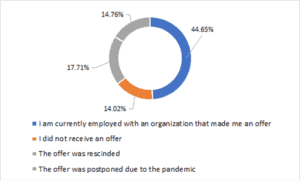
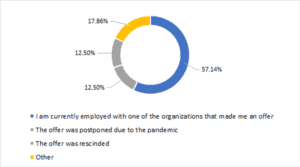
SWE collegiate members not only had their Spring 2020 interrupted, but for some, their summer and future opportunities were also changed. Almost one-third (32%) of SWE collegiate members who received a summer job offer had the offer rescinded or postponed. Similarly, almost a quarter (24%) of students who graduated in Spring 2020 had their job offers rescinded or postponed.
College students and summer job opportunities
Graduating seniors and job opportunities
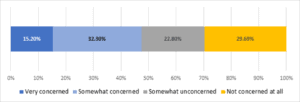
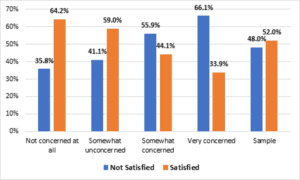
Students have expressed concerns about their future in college. Specifically, 48% of students are concerned that the pandemic will delay their college graduation date. Moreover, 66% of these students who are very concerned about graduation delays report that they are having difficulty with school-life balance.
Concerns about delays in graduation time
Satisfaction with school-life balance by level of concern about graduation delay
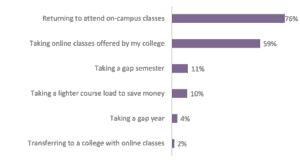
When asked about their intentions for the Fall, the most frequent responses seem to point that colleges and universities are opting for hybrid learning environments. While the majority of them responded that they plan to attend on-campus classes (76%) and take online classes (59%), a small portion of students are considering other options, including 11% taking a gap semester and 10% taking a lighter course load to save money.
Intentions for Fall 2020
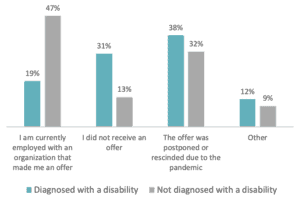
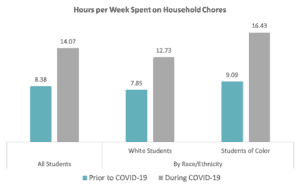
Still, the impact of COVID-19 is also exacerbating existing inequalities among students with disabilities and students of color. For instance, a higher proportion (38%) of students with disabilities than their counterparts (32%) reported that their summer job offers were postponed or rescinded due to the pandemic. Concerns about graduation delays were more pronounced among students of color, such that 57% of students of color were concerned about delays in graduation only 41% of white students expressed similar concerns. All students reported a significant increase in their time spent doing household chores, however, the difference between students of color and white students in hours spent on chores prior to COVID-19 and during COVID-19 also increased.
Impact on students with disabilities
Students of color are disproportionately affected
Impact of COVID-19 on SWE Professional Members
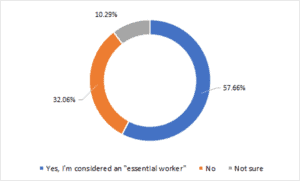
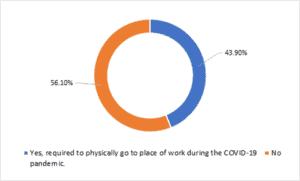
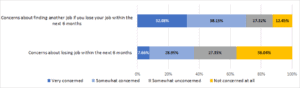
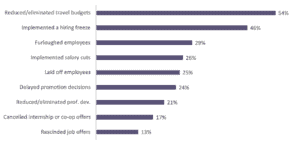
Over half (58%) of SWE professionals are considered essential workers, and about half (44%) were required to physically report to their workplace during the ongoing pandemic. Still, professionals expressed concerns about their future employment with 37% of professionals reporting concerns about losing their jobs in the next 6 months due to the pandemic and 70% reporting concerns about their ability to find another job if they lose their jobs in the near future. These concerns are warranted given that about a quarter of professionals report that their employers have furloughed employees, implemented salary cuts, laid off employees, and delayed promotion decisions while almost half of them also reported that their employers have implemented a hiring freeze.
SWE Professionals who are essential workers
SWE Professionals required to physically go to place of work
SWE Professionals’ concerns about their future employment
Employer response to COVID-19
Despite possible changes to their employment opportunities, 76% of SWE professionals approved of how their employers responded to the COVID-19 pandemic while 93% report that their employers have provided adequate communications in addressing pandemic-related concerns to its employees.
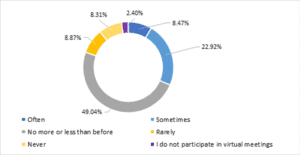
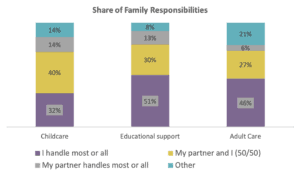
Unfortunately, approximately one-third (31%) of professionals also reported more bias, including getting talked over, interrupted, and ignored, during virtual meetings than they did during in-person meetings. While 68% of women and queer/non-binary professionals report being satisfied with their work-life balance and the majority report equally sharing childcare responsibilities with their partners, most SWE professionals are solely responsible for their children’s educational support and caring for their adult dependents.
SWE Professionals’ experiences with bias during virtual meetings
Share of family responsibilities
Additional COVID-19 Research
- SWE AllTogether blog post: Does Remote Work Bring About Gender Equality?
- AnitaB.org’s Technical Equity Experience (TechEES) Global COVID-19 Impact Pilot Survey Executive Summary: Findings from a survey of women in technology, conducted in March/April 2020.